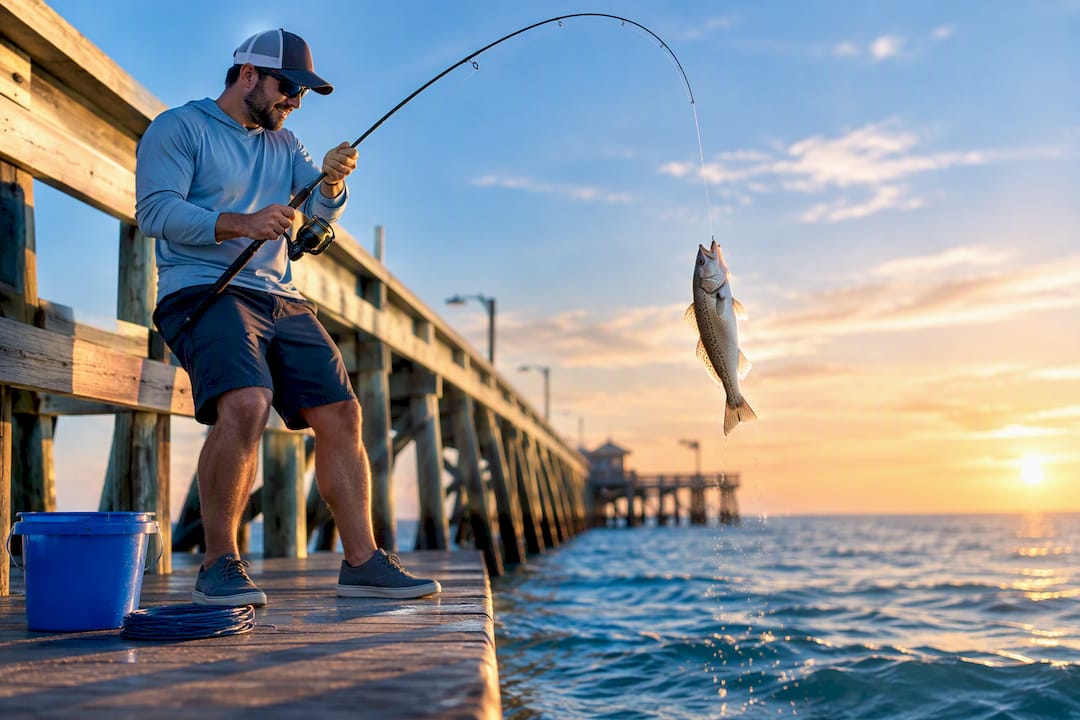
Yes, you can fish from Gulf Shores piers, and it is one of the easiest ways to spend a morning on the Alabama coast. Gulf State Park Pier, Fort Morgan Fishing Pier, and the Orange Beach waterfront piers all welcome anglers with rod in hand. Before you walk out over the water, line up three things: an Alabama saltwater fishing license, a pier or parking permit, and a quick check of that day’s posted hours and rules.
TL;DR:
- The Gulf State Park Pier offers the widest species variety and operates 24 hours, making it ideal for flexible fishing times and deep water species.
- Parking at Gulf State Park requires purchases at kiosks using exact cash or cards, with receipts exchanged at the admission window for a pier permit.
- A valid Alabama saltwater fishing license is mandatory for all anglers, but residents over 65 or under 16 are exempt, and pier-specific, cheaper licenses exist for short-term fishing.
- Peak fishing seasons are spring for pompano and whiting, fall for king mackerel, and night fishing under pier lights is effective for speckled trout and flounder.
- Staying nearby with ground-floor rentals or pet-friendly accommodations significantly enhances early-morning access and overall fishing experience.
Table of Contents
- Which Gulf Shores Pier Should You Fish?
- What Are the Hours, Fees, and Parking Rules?
- Do You Need a License to Fish From the Pier?
- What Fish Are Biting, and When?
- Gear, Rigs, and Tactics That Actually Work
- What Facilities Does the Pier Offer?
- How Do You Get to the Pier and Find Parking?
- What Rules Keep Anglers and Wildlife Safe?
- A Local’s Take on Planning Your Pier Trip
- Where to Stay for Easy Pier Access
- Sources
- FAQ
Which Gulf Shores Pier Should You Fish?
Each pier along this stretch of coast serves a different kind of trip, and picking the right one saves you a wasted morning.
- Gulf State Park Pier is the heavyweight of the bunch. It stretches far enough into the Gulf to put you over deeper structure, and it delivers the widest species variety of any pier in the area, from sheepshead and red drum to Spanish mackerel, flounder, Florida pompano, king mackerel, whiting, and speckled trout, according to Gulf State Park. It also runs 24 hours a day and comes loaded with amenities, which makes it the default pick for most visitors.
- Fort Morgan Fishing Pier sits at the far western tip of the peninsula, closer to the pass where migratory fish funnel through. It draws fewer crowds than Gulf State Park, which makes it a good fit for families who want elbow room and anglers chasing seasonal runs without fighting for rail space.
- Orange Beach waterfront piers, including the pier at Waterfront Park, offer an easy, low-key option for casual anglers and kids. They tend to be shorter and calmer, better suited to a relaxed afternoon than a serious tackle session.
The physical structure matters more than people realize. A long pier acts like an artificial reef, pier pilings collect barnacles and baitfish, and that concentration of small fish pulls in everything that eats them. The farther a pier reaches into deeper water, the more species show up along its length.
What Are the Hours, Fees, and Parking Rules?
Gulf State Park Pier operates 24 hours a day, which is a real advantage if you want to fish before sunrise or after the day-trippers clear out. Fort Morgan and the Orange Beach piers keep more conventional daylight hours tied to park or city schedules, so check the posted signage before planning a night session there.
Parking is where most first-time visitors get tripped up, so here is how the system actually works at Gulf State Park:
- Pay the daily parking fee at the kiosk, and that payment typically includes one daily pier-fishing permit for the driver, according to the park’s beach parking FAQ.
- The kiosk prints a receipt. Hold onto it. You present that receipt at the pier admission window to claim your permit, not at the parking lot itself.
- Anyone else in your vehicle who plans to fish needs a separate pier permit purchased at the admission window.
- Annual and semi-annual permit holders get a decal and placard instead, which covers parking at Gulf State Park locations without a daily fee each visit.
- Kiosks accept cash and credit cards but do not make change or take coins, so bring a card or exact bills.
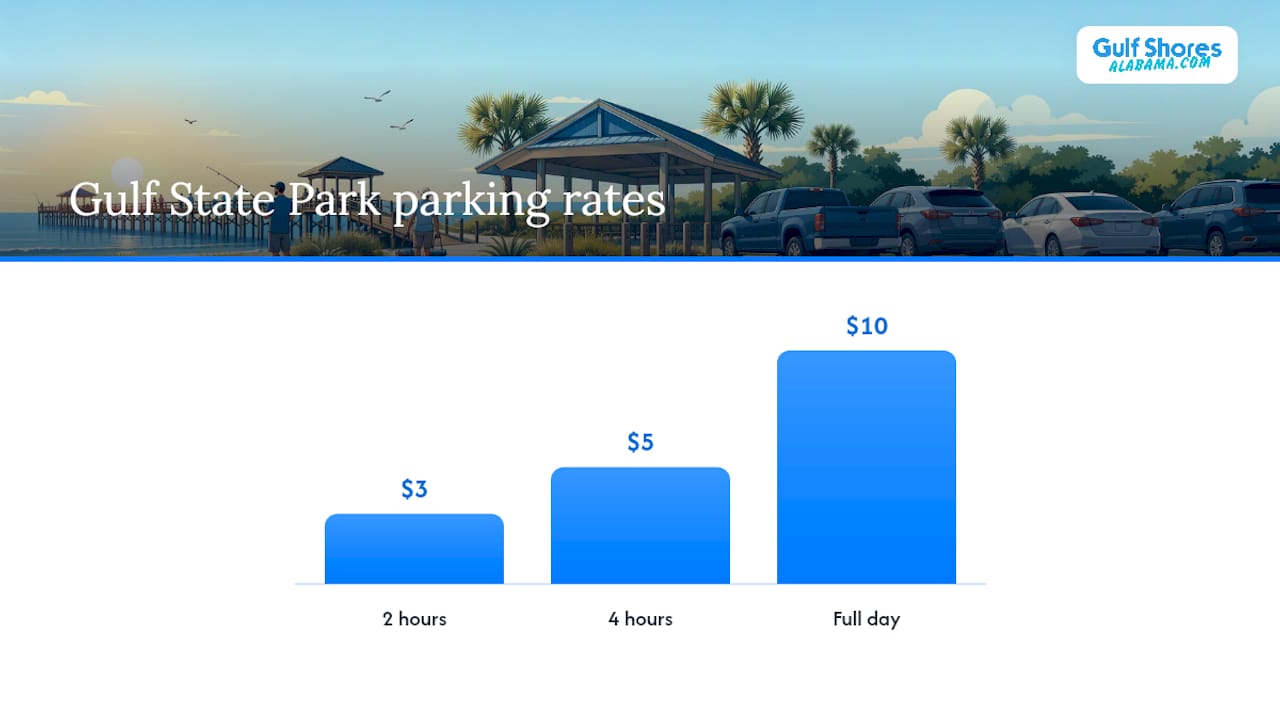
Typical rate tiers run around $3 for two hours, $5 for four hours, and $10 for a full day, with higher rates for passenger buses, per the park’s own parking guidance. If you’re driving in from out of state, this receipt-to-permit workflow is worth reading twice before you arrive. It trips up more visitors than any other single logistics step.
Do You Need a License to Fish From the Pier?
Yes. Alabama requires a valid saltwater fishing license for anyone fishing or possessing fish in the state’s saltwater areas, and that includes every pier covered in this guide, according to the Alabama Department of Conservation and Natural Resources. A few groups are exempt:
- Alabama residents and non-residents under 16 years old.
- Alabama residents age 65 and older.
Beyond the standard saltwater license, Alabama law also authorizes a low-cost annual public fishing pier license, and in some cases allows residents to fish from licensed public piers without buying a full saltwater license under specific conditions, according to Alabama Code § 9-11-56.3. This pier-specific license structure exists because pier fishing carries a different risk profile than boat fishing. If you’re only planning to fish from a pier during your trip and never step onto a boat, ask about this option specifically. It’s often cheaper than the general saltwater license.
You can buy any of these licenses online through Outdoor Alabama or the state’s alabamainteractive portal, and most pier retail shops sell them on-site too. Size and creel limits change periodically and vary by species, so check the official state limits before you keep anything. One more wrinkle: some species regulations shift depending on whether you’re technically in state or federal waters, which can matter for king mackerel and a handful of reef fish caught from longer piers.
What Fish Are Biting, and When?
Gulf State Park Pier’s own species list reads like a greatest-hits record of Gulf Coast fishing: sheepshead, red drum, Spanish mackerel, flounder, Florida pompano, king mackerel, whiting, and speckled trout all show up regularly, according to park data. What changes is when each shows up in numbers worth targeting.
- Spring (March through May): Pompano and whiting move in close to structure, and this is prime pompano season along the whole coast.
- Late spring into summer: Spanish mackerel push through in fast-moving schools, often visible from the rail as they slash through baitfish.
- Fall (September through November): This is the marquee season. King mackerel runs pick up as bait migrates south, and Spanish mackerel activity often peaks again before water temperatures drop.
- Winter: Action slows considerably, but sheepshead and speckled trout stay catchable around pilings for anglers willing to bundle up.
Dawn and dusk produce the most consistent bites year round, and a rising tide moving bait past the pilings tends to trigger feeding activity better than a slack tide. Night fishing under the pier lights can be excellent for speckled trout and occasional flounder, since the lights draw baitfish straight to the structure.
Pro Tip: During peak fall runs, experienced anglers show up 30 to 60 minutes before dawn specifically to claim rail space near the pier’s end, where deeper water and stronger current concentrate migrating fish.
If you want a deeper breakdown of pompano timing and surf tactics that carry over to pier fishing, this guide to surf fishing in Gulf Shores covers seasonal patterns in more detail.
Gear, Rigs, and Tactics That Actually Work
Matching your gear to your target species saves you from losing fish and burning through tackle. Here’s a practical breakdown:
- Rod and reel selection. A light to medium spinning outfit handles pompano and whiting fine. Step up to medium-heavy tackle with 20 to 30 pound line if you’re targeting redfish or hoping to hook a king mackerel, since those fish will test your drag and your patience.
- Rig choice by species. A pompano rig with small hooks and colored beads works well bounced along the bottom near the surf zone. For flounder, a Carolina rig with a sliding sinker lets the bait sit naturally near structure. Trolley rigs, which let you send bait far from the pier and reel it back along a pulley line, are popular for king mackerel, but check posted pier rules first since some piers restrict trolley setups or require specific configurations.
- Bait selection. Fresh shrimp is the most versatile bait on any Gulf Shores pier and works for nearly everything. Cut bait and squid draw in sheepshead and whiting, while sand fleas, when available, are hard to beat for pompano. Most piers with a tackle shop sell fresh bait on-site, so you don’t need to arrive pre-stocked.
- Tactical basics. Secure your rail spot early during peak season, change bait every 15 to 20 minutes if you’re not getting bites, and pay attention to tide charts before you commit to a spot. Night fishing is productive but bring a headlamp, watch your footing near wet planking, and never leave a rod completely unattended near the rail edge.
What Facilities Does the Pier Offer?
Gulf State Park Pier is built for a full day on the water, not just a quick cast. On-site amenities include:
- An indoor retail shop selling bait, tackle, and basic supplies, so forgetting your sand fleas at home isn’t a trip-ending problem.
- Rod and reel rentals along with cart rentals for hauling gear the length of the pier.
- Comfort stations and covered seating at the midpoint, useful when the sun gets brutal by midday.
- Wheelchair-accessible rail fishing sections and observation decks, making the pier genuinely usable for anglers with mobility needs.
Beyond gear, the park runs an Angler’s Academy and seasonal Kids Surf Fishing Clinics, which teach rigging, casting, and conservation-minded handling. If you’re new to pier fishing or bringing kids who’ve never held a rod, these sessions are an underused shortcut to learning local techniques fast instead of guessing your way through a morning.
How Do You Get to the Pier and Find Parking?
Getting set up at Gulf State Park Pier comes down to timing and a little preparation. Arrive at the parking kiosk, pay the fee, and keep your printed receipt. That receipt is what gets you a daily pier permit at the admission window, not the parking lot.
- Arrive 30 to 60 minutes before sunrise during spring and fall weekends if you want a rail spot near the pier’s end.
- Bring a card or exact cash since kiosks don’t make change.
- Out-of-state visitors, including Michigan anglers driving down for a beach week, should bring photo ID for license purchase and keep the parking receipt handy until you’ve claimed your pier permit.
- For a full rundown of area parking rates and lots beyond the pier itself, see this guide to beach parking in Gulf Shores.
What Rules Keep Anglers and Wildlife Safe?
Pier fishing comes with a short list of rules that exist for good reason, and they’re worth knowing before you walk out.
- Rod limits typically cap how many lines one angler can fish at once, and unattended rods near the rail edge are discouraged or prohibited outright.
- Trolley rigs and certain bait presentations have specific posted restrictions that can differ from open-water norms, so read the signage even if you’ve fished piers elsewhere.
- Shark fishing and landing sharks from the pier is restricted under Alabama Administrative Code rules covering prohibited gear and activities.
- Feeding wildlife, including seagulls and any marine life near the pier, is against park rules, and anglers should keep a safe distance from any alligator or shark sightings reported nearby.
Following posted creel and size limits isn’t just about avoiding a fine. Alabama’s saltwater fisheries depend on anglers respecting those numbers season after season, and pier enforcement includes citations for violations, so treat the posted rules the same way you’d treat them on a licensed charter boat.
A Local’s Take on Planning Your Pier Trip
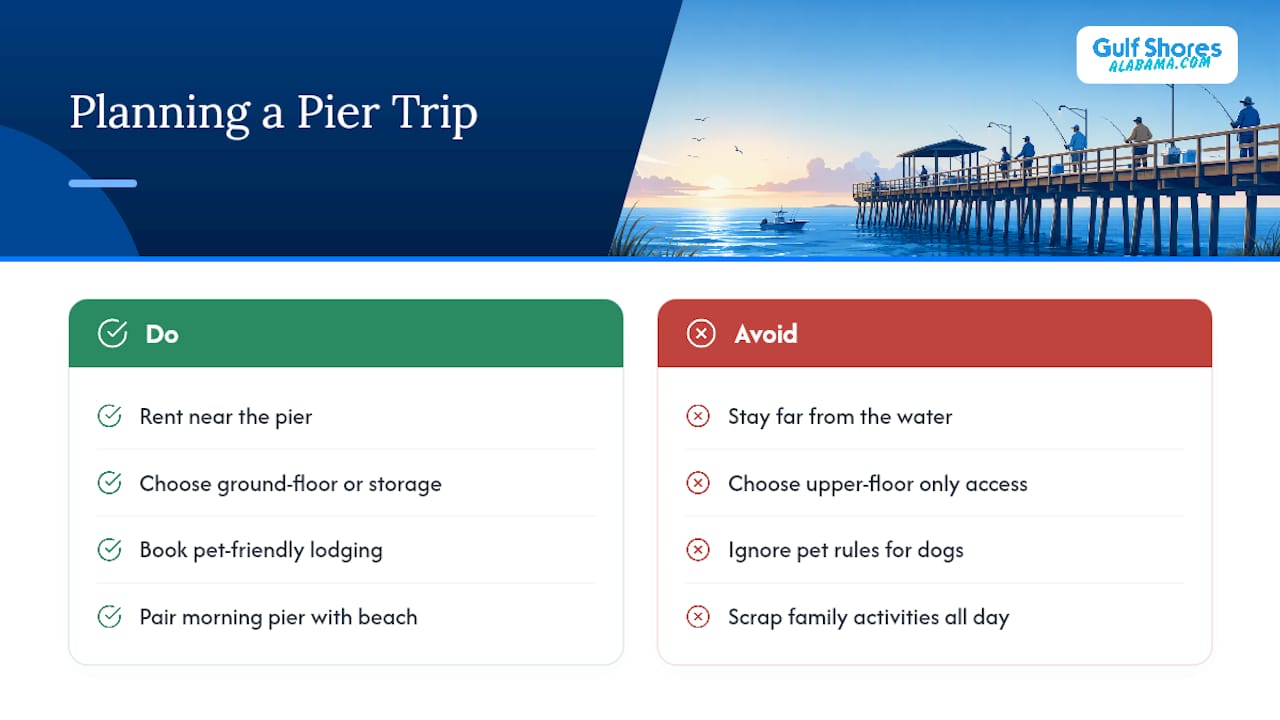
The biggest mistake visiting anglers make isn’t gear or licensing. It’s staying too far from the water. A rental within a short drive of Gulf State Park Pier means you can actually use that 24-hour access window instead of losing an hour each way in beach traffic.
Ground-floor condos or beach houses with outdoor storage make a real difference too, since hauling rods, coolers, and a cart full of tackle up three flights of stairs gets old fast. If you’re traveling with a dog, a pet-friendly rental means one less logistics headache. And if the trip includes non-fishing family members, pairing an early pier session with an afternoon at one of the area’s family beaches keeps everyone happy without a lot of extra planning.
— Joe
Where to Stay for Easy Pier Access
Staying close to Gulf State Park Pier changes how your whole trip works. Instead of budgeting an hour for beach traffic before a dawn bite, you’re on the pier in minutes, gear already loaded, coffee still hot.
Gulfshoresalabama connects you directly with property owners across Gulf Shores, Orange Beach, and Fort Morgan, so you can book without the added service fees that come with big booking sites. For anglers, that means finding the right fit fast: beachfront condos with elevator access for hauling gear, spacious beach houses with outdoor rinse stations and storage for rods and coolers, or pet-friendly cottages if the family dog is coming along. Ground-floor units near the park entrance are especially popular with early-rising anglers who don’t want to wrestle a rod cart up a staircase before sunrise. Browse available Gulf Shores vacation rentals and check dates for your trip, then message the owner directly with any questions about gear storage or proximity to the pier.
Sources
- Alapark
- Alabama Department of Conservation and Natural Resources - Saltwater recreational size & creel limits
- Code of Alabama § 9-11-56.3 — Public fishing pier license; saltwater pier fishing license; fees (Justia)
Recommended
- March to May Pompano on Gulf Shores: Surf Fishing Tactics and Beach Rentals
- Gulf Shores Crabbing for Families: Catch Blue Crabs With Up to 5 Traps
- 3 Launches, Fish Rules, and Nearby Stays at Little Lagoon Gulf Shores

About the Author
Joe Godar of the GulfShoresAlabama.com Editorial Team create destination guides, vacation-planning resources, and local travel content focused on Gulf Shores, Orange Beach, and Fort Morgan, Alabama.
Our team researches Alabama Gulf Coast beaches, vacation rental trends, family activities, local attractions, restaurants, events, and direct-booking best practices. Every guide is created to help travelers plan more confidently, discover the best of the Alabama Gulf Coast, and avoid unnecessary third-party guest service fees.
GulfShoresAlabama.com is part of the Emerald Coast by Owner marketing family, connecting travelers directly with verified vacation rental hosts throughout the Gulf Coast since 2016.
This article was reviewed for accuracy and updated using local destination research and current Alabama Gulf Coast vacation rental market insights.