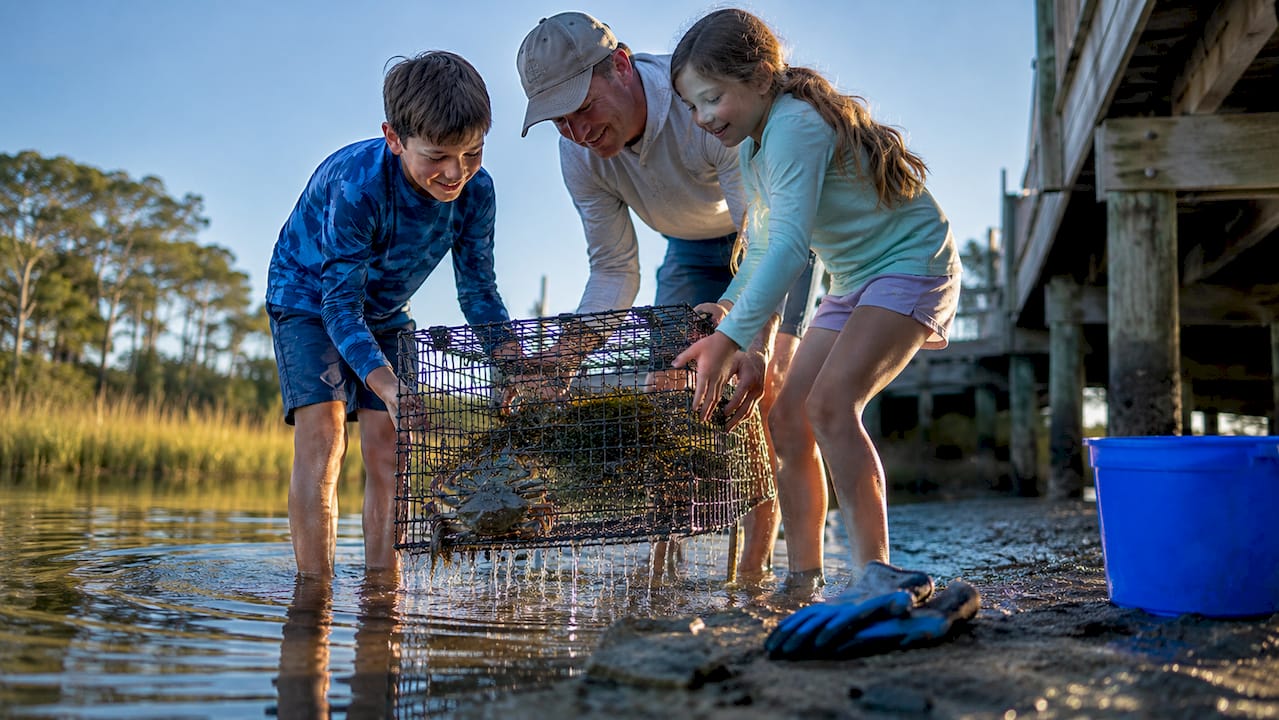
Head to the Gulf State Park Fishing Pier, Orange Beach Waterfront Park, Little Lagoon, or the Bon Secour estuary edges for the most reliable crabbing near Gulf Shores. Before you drop a trap, though, know two things: you need a valid Alabama saltwater fishing license, and you can run up to five crab traps without any extra license. If you’re crabbing after dark, swap your regular flashlight for a red-filtered one so you don’t disorient nesting sea turtles.
TL;DR:
- A valid Alabama saltwater fishing license is required, but up to five traps can be used per person without needing a Crab Catcher license, which costs $50.
- Crabbing is most effective during slack tide, especially in spring and fall, with locations like Gulf State Park Pier, Little Lagoon, and Bon Secour estuary offering the best opportunities.
- Using oily bait such as chicken necks or fish heads improves catch rates, and checking crab size before keeping is essential to comply with size regulations.
- Children and beginners should prefer hand-line crabbing or simple traps, and always release egg-bearing or undersized crabs immediately.
- For safety and sustainability, use red-filter flashlights at night, rotate bait for better results, and monitor local regulations on trap placement and crab sizes.
Table of Contents
- Best Places to Crab Near Gulf Shores
- Licenses, Trap Limits, and Size Rules You Need to Know
- How to Crab: Methods, Gear, and Bait That Actually Work
- When to Go: Tides and Seasons That Matter
- Ghost Crabbing After Dark
- Keeping Family Crabbing Trips Safe and Sustainable
- A Local Perspective on Family Crabbing Trips
- Book a Family Rental Near the Pier or Lagoon
- Sources
- FAQ
Best Places to Crab Near Gulf Shores
Where you set up shapes everything else about your trip, from which crabs you’ll catch to how easy it is to keep kids entertained between pulls. Each of these spots has a different personality, and matching your gear and expectations to the location makes the difference between a slow afternoon and a bucket full of blue crabs.
- Gulf State Park Fishing Pier: This is the easiest starting point for most families. The pier has concessions nearby, bait for sale, and enough railing space that you can set several hand lines or a trap without elbowing other anglers. It’s paved, stroller-friendly, and forgiving for first-timers who don’t want to trek through sand with a cooler.
- Orange Beach Waterfront Park: Calmer water and shaded picnic areas make this a solid pick when you’ve got younger kids who need breaks. It’s not as crab-dense as the back bays, but the amenities and easy parking make it low-stress for a first outing.
- Little Lagoon: A sheltered back-bay system that’s ideal for baited traps and hand lines alike. Blue crabs tend to stack up along the grassy edges and drop-offs here, and the calmer water makes it easier for kids to watch a trap fill up without fighting current or boat wake.
- Bon Secour River and estuary edges: If you’ve got a kayak, this is where quieter, less-crowded crabbing happens. The estuary’s brackish water near Bon Secour National Wildlife Refuge supports healthy blue crab populations, though access points are more limited and better suited to families comfortable paddling.
A few areas around marked channels, boat launches, and navigational markers restrict where you can set gear, so scout your spot before you bait a single trap. If you’re staying nearby, check out other things to do in Gulf Shores to round out the day once the crabs stop biting.
Licenses, Trap Limits, and Size Rules You Need to Know
Alabama keeps its crabbing rules fairly simple, but skipping them can turn a fun afternoon into a costly one. Every recreational crabber needs a valid Alabama saltwater fishing license, available as an annual license or a 7-day visitor pass, which covers most families visiting for a week.
- You can use up to several recreational crab traps per person without needing anything extra.
- Running more than a few traps requires a Crab Catcher license, which expires every September 30.
- Keepable blue crabs must measure at least a certain minimum size across the carapace, point to point.
- Egg-bearing females (you’ll see the orange “sponge” underneath) must go back in the water, no exceptions.
- Traps can’t sit within 300 feet of marked channels or public launches unless they’re physically attached to a pier, dock, or piling.
Statistic Callout: The Crab Catcher license runs $50 and violations count as a Class C misdemeanor, so it’s worth confirming your trap count before you head out.
In restricted waters, traps must stay attached to a structure and within 10 feet of it. Measure any keeper crab before it goes in the cooler, and release anything undersized quickly and gently by tipping it back into the water rather than tossing it.
How to Crab: Methods, Gear, and Bait That Actually Work
You don’t need a boat or expensive equipment to catch blue crabs in Gulf Shores. Most families do fine with one of two methods, and both work from a pier, dock, or kayak.
- Rig a crab trap or basket. Tie bait securely inside the trap, lower it off the pier or dock, and let it settle on the bottom for 15 to 20 minutes before checking it.
- Try hand-line crabbing. Tie bait to a weighted line, drop it near structure or grass beds, and wait to feel a tug. This is the method local guides point to as the best first technique for kids, since the pull is immediate and there’s barely any gear to manage.
- Net your catch. Once a crab is close to the surface, scoop it with a long-handled net rather than lifting it by the line, which usually spooks it into letting go.
- Measure before you keep. Hold the crab from behind, check the carapace against a gauge, and release anything under five inches or carrying eggs.
Bait matters more than most first-timers expect. Chicken necks, fish heads, and bull lips are local favorites because oily, scent-heavy bait tends to stay on the hook or in the trap longer, which means fewer trips back to re-bait.
Pro Tip: Bring a red-filter flashlight even for daytime trips, since you’ll likely want to stay out past sunset once the kids start catching crabs faster than expected.
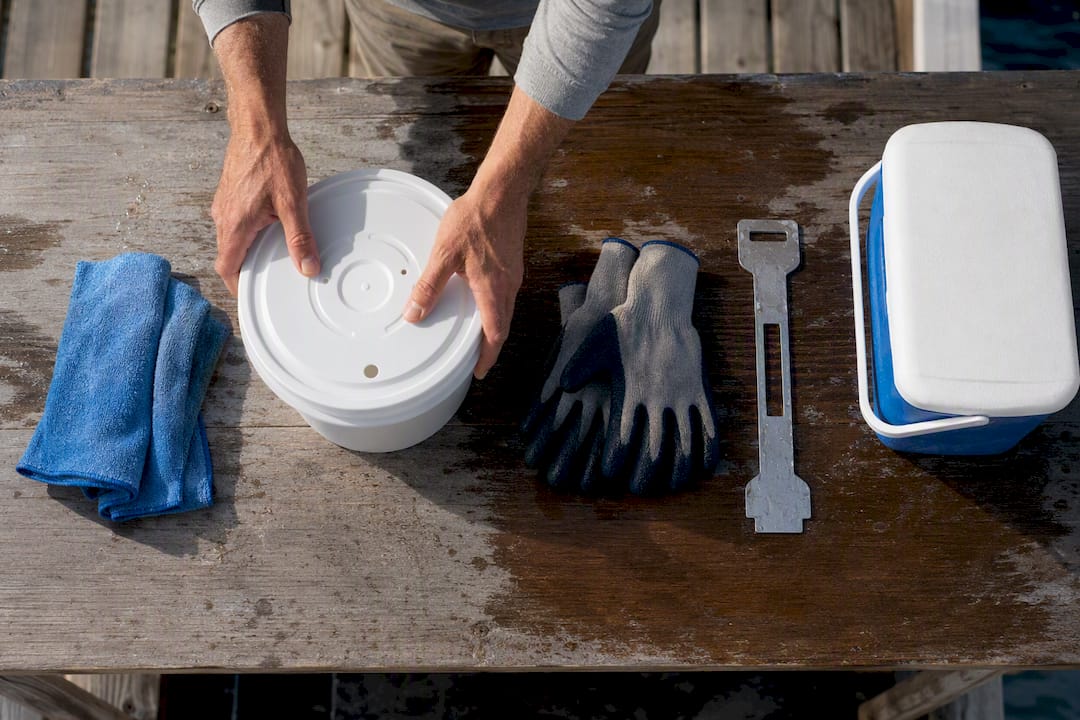
Pack a bucket with a lid, thick gloves for handling, a measuring gauge, and a cooler if you plan to keep dinner. A basic checklist beats an expensive one for a first outing.
When to Go: Tides and Seasons That Matter
Blue crabs feed most actively during slack tide, the roughly two-hour window before and after high or low tide when water movement slows down. Outside that window, current makes it harder for crabs to find and hold onto bait, so timing your trip around the tide charts matters more than picking morning versus evening.
- Target the two hours surrounding slack tide, whether that lands at sunrise or midafternoon.
- Warmer months, roughly spring through fall, bring the most consistent blue crab activity.
- Free tide apps or NOAA tide charts make it easy to plan a trip around the right window.
- Lagoon and estuary locations respond to tides differently than an open pier, so check conditions for your specific spot rather than assuming one schedule fits everywhere.
A pier trip planned around a midday slack tide often outperforms a random evening visit, even though evenings feel more scenic.
Ghost Crabbing After Dark
Ghost crabs are the small, sand-colored crabs that dart across Gulf Shores beaches after sunset, and evenings are genuinely the best time to spot them since they burrow during the day. This is a low-gear activity that works well for younger kids who aren’t quite ready for traps or hand lines.
- Use a red-filter flashlight rather than white light, since regular beams disorient nesting sea turtles and their hatchlings.
- Bring a bucket, a small net, and a flashlight, then release every crab you catch.
- Stay off any dune area marked for turtle nests, and give posted nesting sites a wide berth.
Keeping Family Crabbing Trips Safe and Sustainable
A little supervision and a few habits go a long way toward keeping everyone safe and the crab population healthy for next season.
- Assign kids specific jobs, like holding the bucket or watching the line, so they stay engaged without wandering toward deep water.
- Release undersized or egg-bearing crabs immediately, and check traps for escape rings so nothing gets left to die in lost gear.
- A crab pinch rarely breaks skin, but rinse it and apply an antiseptic if it does; reapply sunscreen and take water breaks during long pier sessions.
- Pier concessions and local tackle shops near Gulf State Park often rent or sell inexpensive traps and nets if you’d rather not travel with your own.
Pro Tip: Rotate two or three baits during a long session. Crabs lose interest in bait that’s been in the water too long, and fresh scent pulls in new crabs faster than leaving one trap soaking all afternoon.
A Local Perspective on Family Crabbing Trips
Families who stay close to the pier or Little Lagoon tend to have the smoothest trips. A short walk with a bucket and a trap beats a long drive every time, and the families who do best usually keep their gear simple: one trap, a net, and patience. Vacation rental listings include a variety of options from budget condos to larger beachfront homes, which helps many families return year after year to the same stretch of coast.
— Joe
Book a Family Rental Near the Pier or Lagoon
Booking a vacation rental is a practical alternative to hotels and long drives when you want to check a trap. Staying in a property near Gulf State Park Fishing Pier or Little Lagoon means you can walk your gear down for a quick session before breakfast and come back for lunch without losing half the day to traffic.
Many family-friendly listings include outdoor storage space for buckets, traps, and coolers, so you’re not hauling gear through a lobby. Browse Gulf Shores Vacation Rentals to compare beachfront condos and pet-friendly cottages by location, or check out this family-friendly property near the coast if you want a head start on finding a place close to the water. Reach out to the host directly to confirm walking distance to your preferred crabbing spot before you book.
Sources
- Recreational blue crab regulations | Outdoor Alabama
- Section 9-12-124 - ‘Crab Catcher’ License (Code of Alabama)
- Rule 220-3-.31 - Crabs (Alabama Administrative Code)
- Gulfshores
Recommended
- Things to Do in Gulf Shores: Family Bucket List Guide
- Best Beach in Gulf Shores: Top Spots for Families
- 3, 5 & 7 Day Gulf Shores Road Trips: Beach, Wildlife, and Forts

About the Author
Joe Godar of the GulfShoresAlabama.com Editorial Team creates destination guides, vacation-planning resources, and local travel content focused on Gulf Shores, Orange Beach, and Fort Morgan, Alabama.
Our team researches Alabama Gulf Coast beaches, vacation rental trends, family activities, local attractions, restaurants, events, and direct-booking best practices. Every guide is created to help travelers plan more confidently, discover the best of the Alabama Gulf Coast, and avoid unnecessary third-party guest service fees.
GulfShoresAlabama.com is part of the Emerald Coast by Owner marketing family, connecting travelers directly with verified vacation rental hosts throughout the Gulf Coast since 2016.
This article was reviewed for accuracy and updated using local destination research and current Alabama Gulf Coast vacation rental market insights.