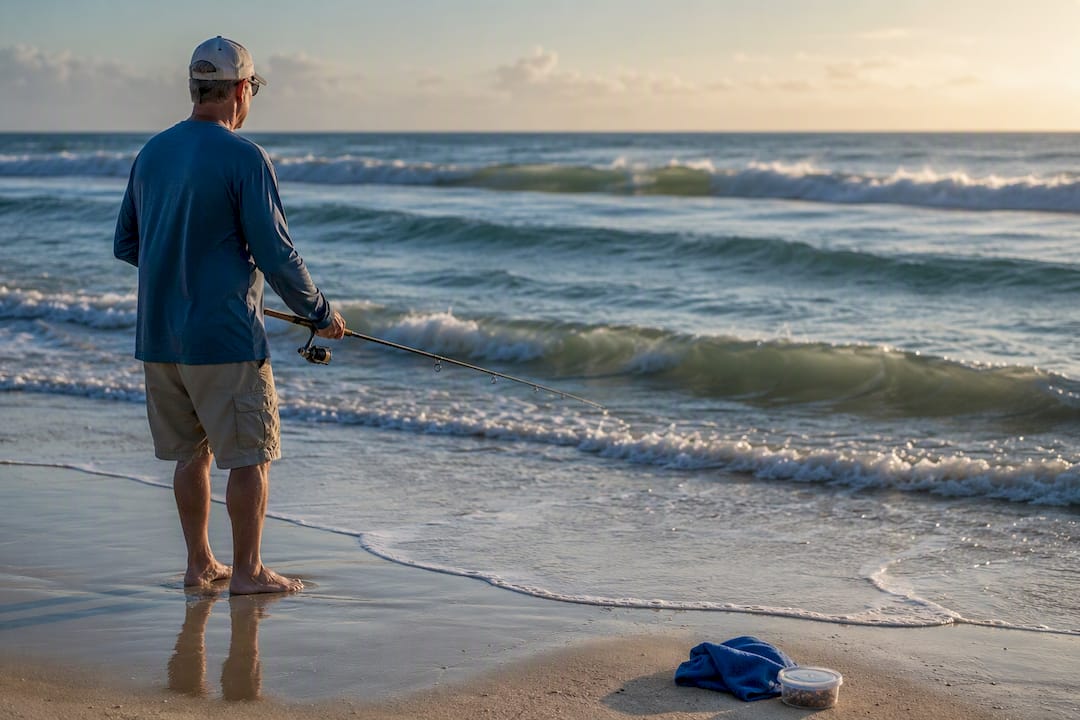
Pompano in the spring and fall, whiting nearly any month, and a two-hook dropper baited with sand crabs will out fish almost anything else in the Gulf Shores surf. Fish the first trough at dawn or late afternoon on a moving tide, and your odds jump considerably. Grab a bucket of sand crabs or fresh shrimp tonight, and be on the beach before the sun clears the horizon tomorrow.
TL;DR:
- Fish in the first trough just past the breakers with bait sitting still, as this zone yields the highest success for pompano and whiting.
- Timing your trip around dawn, late afternoon, and a moving tide significantly increases strike rates, especially in spring for pompano and fall for redfish.
- Using fresh sand crabs or shrimp on a two-hook dropper rig produces better results than packaged bait and keeps live crabs lively for hours.
- Choosing a rental close to the beach allows early access to prime fishing spots and minimizes travel time, especially during peak seasons in spring and fall.
- Always follow Alabama fishing regulations, including license requirements and seasonal limits, and practice beach etiquette to ensure safety and a positive experience.
Table of Contents
- Surf Fishing Gulf Shores: Tactics That Actually Work
- Seasons and Species: A Local Calendar for Gulf Shores Surf Anglers
- Best Places to Fish In and Near Gulf Shores
- Gear, Rigs, and Bait That Consistently Work on Gulf Shores Surf
- Licenses, Limits, and Regulations You Must Follow in Alabama Waters
- Safety and Beach Etiquette Every Surf Angler Should Follow
- Why Lodging Location Changes Your Surf Fishing Results
- Plan Your Surf Fishing Trip With the Right Home Base
- A Local Take on Getting Started
- Sources
- FAQ
Surf Fishing Gulf Shores: Tactics That Actually Work
Reading the water matters more than distance. The beach in front of you usually has at least one trough, a shallow channel between the shore and the first sandbar, where waves break twice as they roll in. That first trough is where pompano and whiting cruise looking for sand crabs and shrimp getting tumbled out of the sand, and it’s the highest-percentage zone on the entire beach. You don’t need a 300-yard cast. You need your bait sitting still in that trough, just past the first breaker.
Tide direction changes everything. A moving tide, whether incoming or outgoing, stirs up the bottom and pushes bait into the wash. A dead-flat tide usually means a slow morning.
Practical moves that separate a good session from a skunked one:
- Scout for darker water, rip currents, or a dip in the sandbar before you cast a single line.
- Watch for diving birds or nervous baitfish. Both mean predators are working nearby.
- If nothing hits in 20 to 30 minutes, move down the beach rather than waiting it out.
- Park close to public beach access points to avoid a long walk with a loaded cart.
- Keep your shadow and footsteps off the wash line. Pompano spook easily in clear water.
Pro Tip: Dig sand crabs at the last wave line right as it recedes, and keep them in a damp bucket with wet sand, not water. They stay lively for hours that way and outperform almost any packaged bait.
Seasons and Species: A Local Calendar for Gulf Shores Surf Anglers
Timing drives more of your success than gear ever will. Gulf Shores really runs on two seasons for surf anglers: the spring pompano run and the fall migration push, with quieter but still productive stretches in between.
- March through May: Pompano peak hard during this window. Carry sand crabs and a two-hook pompano rig, since this is when the biggest schools cruise the troughs.
- June through August: Blacktip sharks, jack crevalle, and early-morning redfish and speckled trout dominate. Skip the midday hours entirely. The water warms enough that gamefish drop into deeper, cooler water and stop feeding in the shallows until the evening cools things off.
- September through November: Redfish and flounder migrate heavily along the beach, and a second, smaller pompano run often follows the first cold fronts.
- December through February: Whiting and winter trout keep biting even when the air turns cold, though flounder go off-limits in November under the state’s seasonal closure.
Daily timing follows the same logic year-round. Dawn and the last two hours before sunset, timed to a moving tide, consistently outproduce the middle of the day. Some anglers also plan trips around solunar-major windows, the periods tied to moon position that many guides swear boost feeding activity, though tide and light still matter more on the Gulf Shores surf than moon phase alone.
Best Places to Fish In and Near Gulf Shores
Location choice on any given day comes down to crowd size and which species you want.
- Gulf State Park beaches and fishing pier. The pier gives you deep water access without wading, plus bait shops, restrooms, and rod rentals on-site. Expect pompano, whiting, Spanish mackerel, and the occasional shark from the end of the pier.
- Fort Morgan and the western stretches. Fewer crowds and less foot traffic mean less spooked fish, particularly good for pompano and redfish runs when the main public beaches fill up.
- Little Lagoon Pass and back-bay spots. When the open surf gets crowded or rough, these calmer passes hold flounder and speckled trout that don’t always show up on the open beach.
- Any stretch with visible structure. Darker water, a rip current, exposed shell beds, or diving birds all signal a better spot than a featureless flat beach, regardless of which access point you started at.
Move to a pier or back-bay location anytime wind or surf conditions turn rough. It’s often safer and still productive.
Gear, Rigs, and Bait That Consistently Work on Gulf Shores Surf
A 7 to 9-foot medium-action surf rod paired with a reel spooled in 15 to 20-pound line covers pompano, whiting, and redfish. Stepping up to 30-pound braid with a heavier rod makes sense if you’re specifically targeting sharks or bull redfish from the beach.
- Two-hook pompano dropper rig: two size 2 or 4 hooks branched off a 2 to 4-ounce pyramid sinker, which holds bottom in the wash better than round or bank sinkers.
- Bait that produces: sand crabs (mole crabs) and fresh shrimp for pompano and whiting; cut mullet for redfish and sharks.
- Terminal tackle: fluorocarbon leader in the 20 to 40-pound range, small barrel swivels, and circle hooks whenever you’re fishing natural bait for anything that might be a shark or redfish.
- Packing checklist: rod holder or sand spike, needle-nose pliers, a sand-flea pump or small shovel, sunscreen, and a rinse-water jug for your hands and gear.
Artificial jigs and spoons work for Spanish mackerel and jack crevalle when you see them working bait schools near the surface, but live or fresh-cut bait wins for anything feeding on the bottom.
Licenses, Limits, and Regulations You Must Follow in Alabama Waters
Every angler fishing or possessing fish in Alabama’s saltwater needs a Saltwater Fishing License, whether you’re wading the surf or standing on the pier.
- Annual, trip, and pier-specific license options exist, with the state’s annual saltwater license priced around $30.05 and a short-term trip license around $12.35.
- Alabama enforces size and creel limits along with a 20-fish aggregate reef-fish cap and a seasonal flounder closure that runs through November.
- Chumming or bloodbaiting for sharks near swimmers is prohibited, and circle hooks are required when fishing natural bait for species that might include sharks.
- Alabama’s rules apply even to fish caught in federal waters, so check current regulations at Outdoor Alabama before every trip, since limits shift from year to year.
Safety and Beach Etiquette Every Surf Angler Should Follow
Surf fishing shares the beach with swimmers, so a little courtesy keeps everyone safe and welcome.
- Fish the far edges of crowded beach sections, and choose early morning or evening hours when swimmers thin out.
- Never chum or bait heavily for sharks anywhere near people in the water.
- Respect posted boundaries near Bon Secour National Wildlife Refuge, where nesting shorebirds and sea turtles need undisturbed space.
- Pack out all cut bait, line scraps, and hooks. Nothing ruins a beach walk faster than discarded tackle.
- Call out “cast!” before you throw, and keep your line low and clear of anyone walking nearby.
Why Lodging Location Changes Your Surf Fishing Results
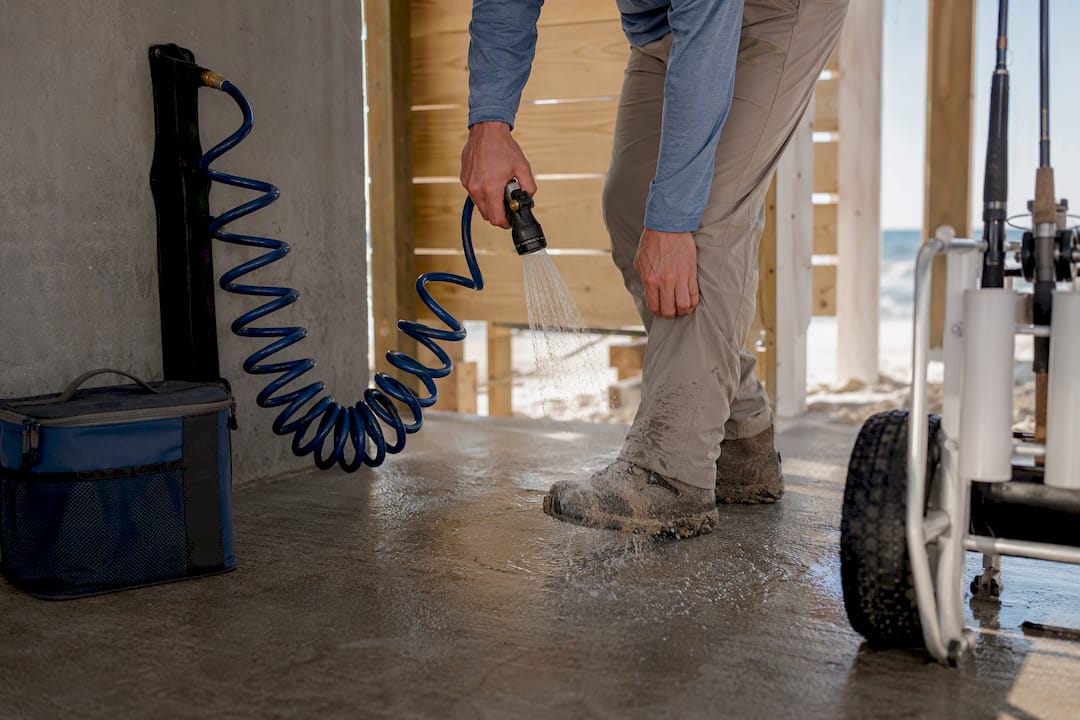
Where you sleep decides whether you make the dawn bite or miss it hitting snooze in traffic. Gulf Shores blends surf, back-bay, and reef fishing in one compact stretch of coast, which means a rental within walking distance of the beach lets you fish the first light trough, then shift to Little Lagoon or a reef trip that same afternoon. Vacation rental marketplaces list beachfront condos and Gulf-front cottages suitable for that kind of day. Look for a property with covered parking for your rod cart, an outdoor rinse station, and early check-in if you’re arriving the night before a dawn session.
Plan Your Surf Fishing Trip With the Right Home Base
A beachfront rental means you’re rigged up and casting into the first trough before the crowds even find a parking spot. Browse Gulf Shores vacation rentals directly with owners, from budget-friendly condos to larger Gulf-front homes with room for the whole fishing crew.
If you want specifics on what to expect from a beachfront stay, the best places to stay on the beach in Gulf Shores breaks down access points and amenities that matter most to anglers, like proximity to public beach entries and outdoor gear storage. Spring pompano season and fall redfish runs both increase demand for rentals, so booking early is advised for beachfront units. Check pet policies and parking allowances before you book if you’re bringing a pet or towing gear. Ready to lock in your dates? Take a look at this Gulf-front property and check availability for your next trip.
A Local Take on Getting Started
Most visiting anglers overthink surf fishing before they even hit the sand. They show up with heavy tackle meant for a pier, cast as far as their rod allows, and wonder why nothing bites. The fish are usually sitting 20 to 40 feet from shore, not 200. That’s the biggest misconception worth correcting: distance isn’t the variable that matters here. Position and timing are.
The second thing beginners get wrong is treating every trip the same regardless of season. A rig that produces pompano in April will sit untouched in July, when the real action shifts to dawn patrols for trout and redfish before the water gets too warm. Anglers who track the calendar and adjust their target species catch fish consistently. Anglers who show up expecting one universal approach usually go home disappointed.
If there’s one habit worth building, it’s patience with location over patience with time. Twenty unproductive minutes in one spot tells you more than two unproductive hours. Move, read the water again, and try the next trough down the beach. Gulf Shores rewards anglers who treat the shoreline as a series of small decisions rather than one long cast into the unknown.
— Joe
Sources
- Surf Fishing in Gulf Shores & Orange Beach
- Saltwater Recreational Licenses | Outdoor Alabama
- Surf fishing guide: Gulf Coast
Recommended
- Gulf Shores Vacation Rentals | Orange Beach & Fort Morgan Rentals
- Gulf Shores Condo Rentals Pet Friendly: 2026 Guide
- Pet-Friendly Beach House Rentals in Gulf Shores, AL

About the Author
Joe Godar of the GulfShoresAlabama.com Editorial Team creates destination guides, vacation-planning resources, and local travel content focused on Gulf Shores, Orange Beach, and Fort Morgan, Alabama.
Our team researches Alabama Gulf Coast beaches, vacation rental trends, family activities, local attractions, restaurants, events, and direct-booking best practices. Every guide is created to help travelers plan more confidently, discover the best of the Alabama Gulf Coast, and avoid unnecessary third-party guest service fees.
GulfShoresAlabama.com is part of the Emerald Coast by Owner marketing family, connecting travelers directly with verified vacation rental hosts throughout the Gulf Coast since 2016.
This article was reviewed for accuracy and updated using local destination research and current Alabama Gulf Coast vacation rental market insights.