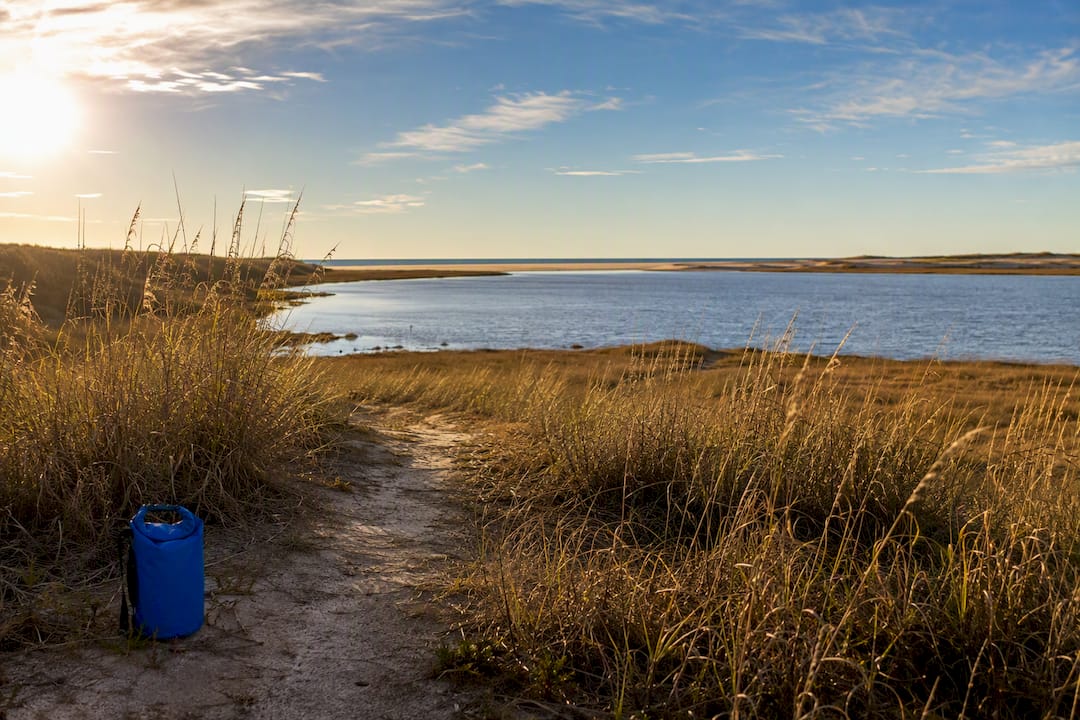
For the quietest Gulf Shores visit, base yourself on the Fort Morgan peninsula or a lagoon-side rental, and plan your days around Bon Secour National Wildlife Refuge and Gulf State Park’s backcountry trails. Book a low-density vacation home instead of a high-rise, since fewer neighbors almost always means less noise. Search the property map on a marketplace like Gulfshoresalabama, then check recent guest reviews for any mention of crowds or traffic before you commit.
TL;DR:
- Fort Morgan offers low-density, private beach homes and limited through traffic, making it the quietest option despite being a 20-minute drive from Gulf Shores’ main area.
- Lagoon-side neighborhoods provide calm waters ideal for kayaking and fishing, with reduced noise from boat traffic and proximity to Highway 59 lowering road noise.
- Visiting Bon Secour National Wildlife Refuge during late April or late October helps balance good bird sightings with fewer visitors seeking solitude.
- Gulf State Park’s backcountry trails and early mornings in spring and fall offer peaceful wildlife watching away from crowded hotspots.
- Booking a private, well-separated rental with features like private entry, yard space, and sound-insulating layout improves your chances of a quiet, restful stay.
Table of Contents
- Which quiet areas in Gulf Shores should you consider?
- Where can you find secluded beaches near Gulf Shores?
- What kind of quiet lodging should you book?
- When is the best time to visit for maximum solitude?
- How do you get to Gulf Shores’ quiet areas?
- Why do low-density rentals win for a peaceful trip?
- Book a quiet stay with Gulf Shores Vacation Rentals
- Helpful resources for planning your trip
- Sources
- FAQ
Which quiet areas in Gulf Shores should you consider?
Not every stretch of Alabama’s Gulf Coast fits the postcard image of packed boardwalks and beach music blasting from every balcony. If you’re coming from Iowa and picturing a slower kind of vacation, the areas below deliver it, each offering a distinctly more peaceful atmosphere.
Fort Morgan peninsula
The Fort Morgan peninsula sits at the far western tip of the coastline, a drive noticeably farther from the main Gulf Shores strip by car. Development here is deliberately sparse. Instead of high-rise towers, you’ll find low-density gated communities, private beach homes, and long stretches of undeveloped dune line. Kiva Dunes is a well-known example of this kind of community, known for its golf course and private beach access rather than a busy public boardwalk scene.
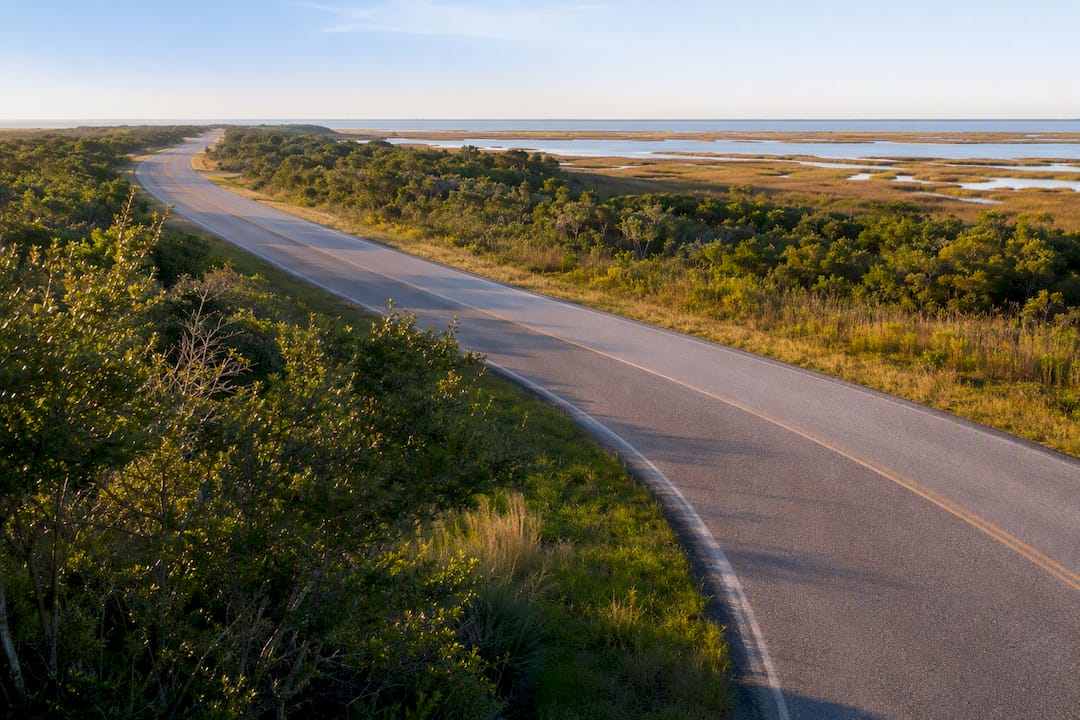
What makes Fort Morgan genuinely quiet isn’t just the lower building count. The peninsula ends at Fort Morgan State Historic Site, a 19th-century military fort, and just beyond that sits the ferry landing that carries vehicles across Mobile Bay to Dauphin Island, naturally limiting through traffic. You’re not driving past a strip of restaurants and go-kart tracks to get to your rental; you’re driving down a two-lane road with marsh and scrub oak on either side.
West Beach and the “quiet side”
Travel writers often describe the stretch west of the main Gulf Shores public beach as the area where development thins out and maritime forest starts to reclaim the landscape. This isn’t a single neighborhood so much as a transition zone: fewer condo towers, more single-family rental homes, and beach access points that don’t come with a parking garage attached.
Lagoon-side neighborhoods
Little Lagoon runs parallel to the Gulf for several miles, and the homes along its shore offer a genuinely different vacation rhythm. Instead of surf and crowds, you get flat water suited to kayaking, paddleboarding, and fishing right off a private dock. Lagoon-side rentals tend to be quieter for three concrete reasons:
- Boat traffic on the lagoon is lighter and slower than beach foot traffic, so mornings and evenings stay calm.
- Many lagoon homes have private docks, which cuts down on the shared-amenity noise you’d get at a busy public boat launch.
- The lagoon shoreline sits back from Highway 59, the main corridor that carries beach traffic, so road noise drops off noticeably.
Pro Tip: When you’re scanning listings, look for the words “canal front” or “lagoon front” in the property description, then check the satellite view to confirm the home isn’t wedged between two short-term party rentals.
Weighing the trade-offs
Quiet has a cost, and it’s usually measured in minutes, not dollars. Fort Morgan puts you a solid 20 minute drive from the restaurant density near the Gulf Shores public beach. Lagoon-side homes are closer to the action but still set back from it, so you’ll do a little more driving for dinner out or a night of live music. If your idea of vacation includes walking to a seafood shack every evening, weigh that against the appeal of falling asleep to actual quiet instead of a rooftop bar three floors up.
Where can you find secluded beaches near Gulf Shores?
Bon Secour National Wildlife Refuge is the single best answer if solitude is the goal. The refuge covers approximately 7,000 acres of undisturbed coastal barrier habitat, spread across five separate units along the peninsula, and most visitors never make it past the parking lot.
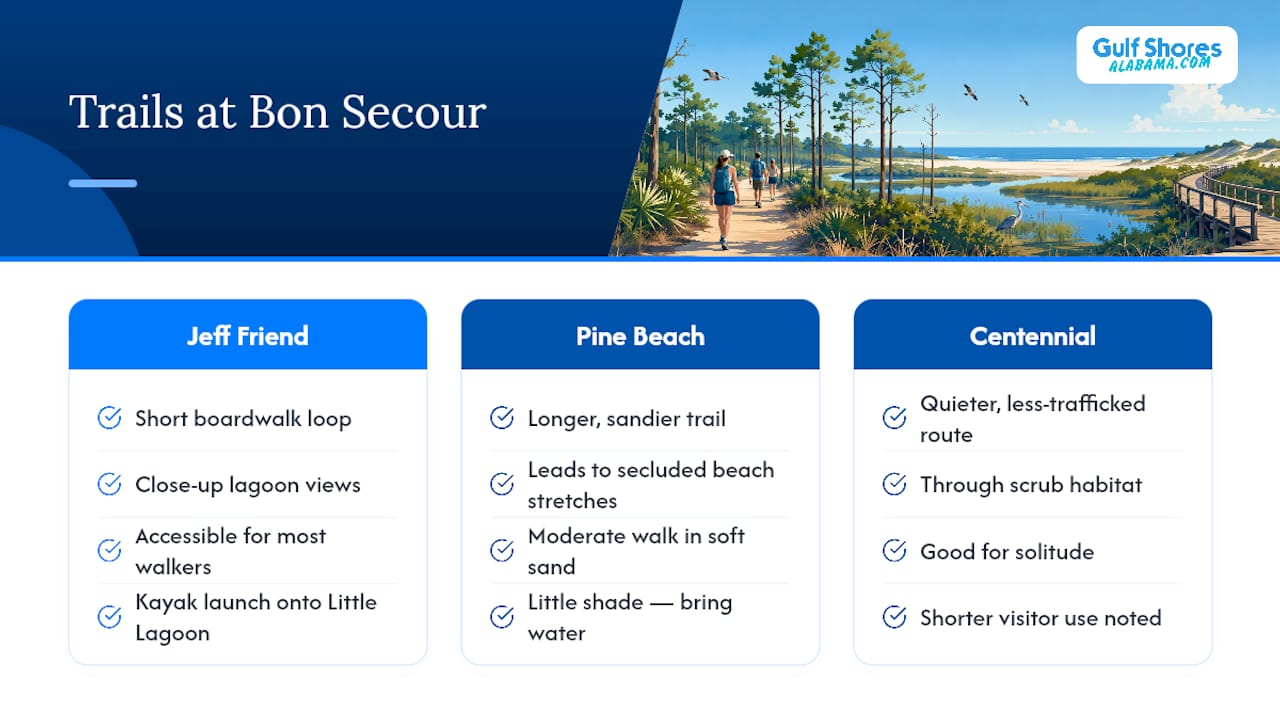
Three trails do the heavy lifting for a refuge visit. Jeff Friend Trail is a short boardwalk loop with close-up lagoon views and enough accessibility that it works for most walking abilities. Pine Beach Trail is longer and sandier, leading out to some of the most secluded beach stretches on this whole coast; plan for a moderate walk in soft sand, and bring water because there’s no shade for most of it. Centennial Trail rounds out the main options with a quieter, less-trafficked route through scrub habitat.
A few practical rules matter here. Pets are not allowed inside the refuge, full stop, so this isn’t the spot for a dog-friendly beach day. Facilities are limited: there’s a visitor center, but restrooms and water fountains are sparse once you’re out on the trails, so pack accordingly. If you paddle, the Jeff Friend Trail also doubles as a kayak launch point onto Little Lagoon.
Birdwatchers get an extra reason to visit. The refuge has documented more than 370 bird species, and spring and fall migration windows bring the most activity. Here’s the counterintuitive part: those same migration windows also draw more birders to the refuge. If your goal is solitude rather than maximum bird density, a weekday during the tail end of migration season, late April or late October, tends to split the difference between good sightings and a near-empty trailhead.
Gulf State Park’s backcountry trails
Gulf State Park takes a different approach to quiet. Instead of raw wilderness, it offers a network of more than 28 miles of paved, interconnected trails across over 6,150 acres, much of it shaded by live oak canopy. The Hugh S. Branyon Backcountry Trail system ties it all together, and two segments stand out for a peaceful visit.
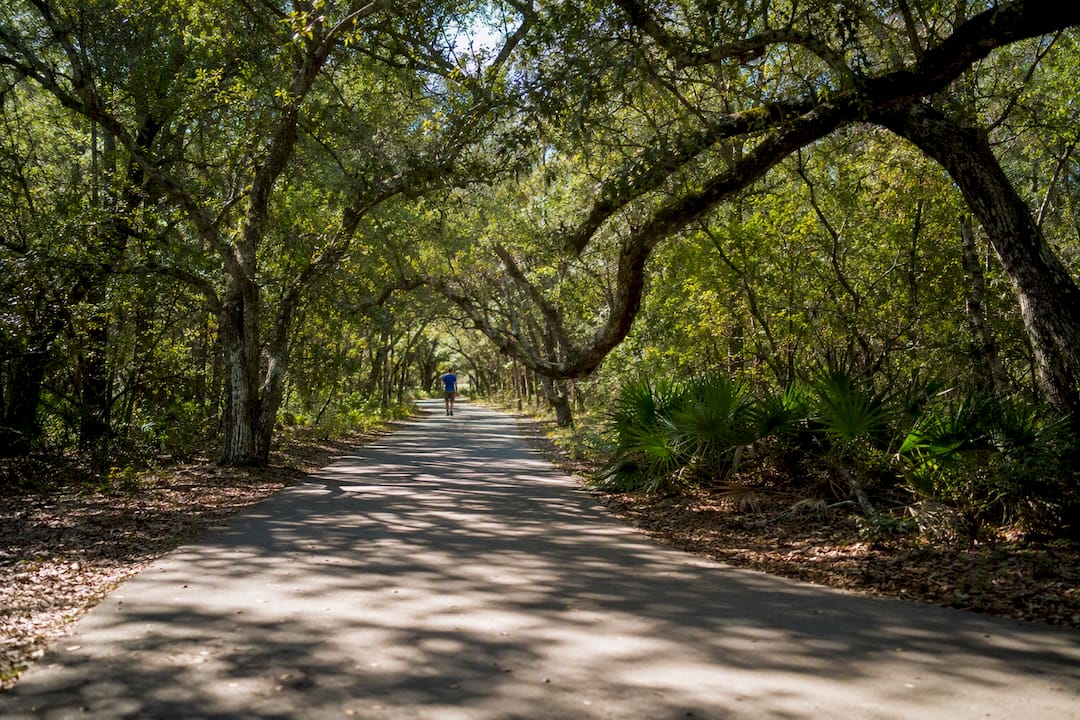
The Gulf Oak Ridge Trail is a paved, shaded route that connects to the rest of the backcountry network. It’s a favorite for birders and casual cyclists precisely because the canopy cover keeps both the temperature and the crowd noise down. Benches and viewing platforms are spaced along the route, so you can stop and just sit for a while without feeling like you’re blocking traffic. Rosemary Dunes offers a different texture entirely: scrubby dune habitat instead of oak forest, with its own quieter rhythm.
Trail veterans consistently recommend early morning or late afternoon for these paths. Wildlife is more active then, and the day-trip crowds haven’t arrived yet or have already cleared out.
By the numbers: Bon Secour’s roughly 7,000 acres and Gulf State Park’s 28-plus miles of trails give Gulf Shores far more protected quiet space than most Gulf Coast destinations its size offer.
Fort Morgan’s beaches and the historic site
Circling back to Fort Morgan itself, the beaches near the historic fort see a fraction of the foot traffic that the main public beach does. Part of that is distance, part of it is that visitors headed to the fort come for history, not sunbathing, so the beach right next to it stays comparatively empty even in peak season.
Safety and etiquette basics
A few habits keep these spots peaceful for wildlife and other visitors alike. May through October is sea turtle nesting season along this coast, so keep beach chairs and tents off dune areas after dark, and don’t disturb marked nests. Fill in any holes you dig in the sand. Pack out everything you bring in, especially at Bon Secour, where trash cans are scarce. These are basic Leave No Trace habits, but they matter more in a place people specifically visit for solitude.
What kind of quiet lodging should you book?
Lodging noise runs on a fairly predictable scale, and understanding it helps you avoid a rental that looks quiet in photos but sits directly above a shared pool deck.
Private beach homes and lagoon-front houses sit at the quiet end of that scale, since you control the whole property and there’s no shared hallway or elevator noise. Low-density condos and gated communities come next: still multi-unit, but with fewer doors per building and often more distance between structures. Small inns and boutique properties land in the middle. High-rise beachfront hotels and condo towers sit at the noisy end, simply because more units means more foot traffic, more elevator dings, and more balcony conversations carrying down to yours.
A handful of specific features tell you a lot before you ever book:
- Private entry. A home with its own driveway and door beats a unit accessed through a shared lobby or stairwell every time.
- Distance from neighbors. Check the lot size and satellite view. A property with 30 feet of yard on each side is a different experience than one crammed between two identical rentals.
- Screened porches or enclosed outdoor space. These let you enjoy the evening air without hearing every conversation from the street or the pool.
- Sound-insulating layout. Older single-story cottages with solid interior walls often beat newer open-concept homes when it comes to actually blocking noise between rooms.
Local rental managers consistently note that low-density vacation homes give travelers more space and often better value than a comparable hotel room, without the shared-hallway trade-offs. When you’re browsing Gulf Shores vacation rentals, use the map view to check how far a listing sits from Highway 59, since properties even a quarter mile off the main corridor tend to be noticeably quieter. Search guest reviews for the word “quiet” directly. If pet policies matter to your trip, this pet-friendly Fort Morgan rentals roundup is worth a look before you filter your search.
A few individual listings illustrate the pattern well. This lagoon-area property shows what a low-density canal home looks like on paper: private dock access and distance from the main beach crowds. Another listing further along Fort Morgan demonstrates the peninsula’s gated-community layout, while this cottage-style option gives a sense of what a smaller, quieter home costs compared to beachfront towers.
Pro Tip: Before booking, message the host directly and ask how many other short-term rentals sit within sight of the property. A quick answer usually tells you more about actual noise levels than any review.
When is the best time to visit for maximum solitude?
Timing does more for your peace and quiet than almost any other decision you’ll make. Spring (April into early May) and fall (late September through October) bring noticeably lighter crowds than the June through August stretch, while the weather stays warm enough to swim and hike comfortably. Within any season, midweek stays, Tuesday through Thursday, thin out both the beaches and the trailheads compared to weekend arrivals and departures.
Daily timing matters just as much as calendar timing. A few habits that consistently pay off:
- Walk the beach or hit a trail before 9:00 AM, when both wildlife and temperatures are more cooperative.
- Save popular boardwalk areas for late afternoon, after the midday rush has cleared out.
- Treat sunset as a lagoon activity rather than a beach one; the crowds cluster on the Gulf side.
Pack for the reality of these spots rather than a resort. Bring water and bug spray for any refuge trail, since shade and fountains are limited. Binoculars pay off at Bon Secour more than almost anywhere else on this coast. Bring your own folding chairs if you want beach seating away from public-access crowds, and always carry a bag out for your own trash, since Bon Secour in particular has few receptacles along its trails.
One more site-specific note worth repeating: no pets are allowed inside Bon Secour National Wildlife Refuge, and several trailheads have no restroom facilities at all, so plan your bathroom stop before you park.
How do you get to Gulf Shores’ quiet areas?
Getting to the quiet side of Gulf Shores takes a little more driving than staying near the main strip, but nothing that requires special planning. Pensacola International Airport in Florida is the closest major airport, roughly an hour’s drive from Fort Morgan, and it’s the most practical option for Iowa travelers flying in rather than making the full road trip south.
Once you’re on the ground, a car is close to essential. Public transit along this stretch of coast is minimal, and the appeal of Fort Morgan and the lagoon neighborhoods is precisely that they sit apart from the walkable, shuttle-served downtown corridor. Highway 59 is the main north to south artery through Gulf Shores, and Fort Morgan Road (State Route 180) branches west from it to run the length of the peninsula out to the historic fort and ferry landing.
If your itinerary includes a Dauphin Island day trip, the Mobile Bay Ferry departs from the very tip of Fort Morgan, which is a nice bonus for travelers already staying on the peninsula. Within the quiet neighborhoods themselves, expect narrower residential roads and limited street parking near refuge trailheads, so arriving early isn’t just about solitude. It’s often about actually finding a parking spot.
Why do low-density rentals win for a peaceful trip?
I’ve come to trust a simple rule when scouting quiet coastal stays: count the neighbors before you count the amenities. A private home with three neighboring properties will almost always feel calmer than a 200-unit tower with a rooftop pool, no matter how nice that pool looks in photos.
The practical test I rely on is map distance plus recent guest comments. Pull up the satellite view, check how far the property sits from Highway 59 and from other short-term rentals, then scan the last dozen reviews specifically for mentions of noise, traffic, or crowded parking. That combination catches problems that professional photos never show.
Be honest with yourself about the trade-off, though. Quiet usually means a short drive to dinner and nightlife, not a walk. If that trade doesn’t work for your trip, a lagoon-side rental closer to the hub splits the difference better than Fort Morgan does.
— Joe
Book a quiet stay with Gulf Shores Vacation Rentals
Vacation rental marketplaces give you direct access to the property types this guide recommends: lagoon-side homes with private docks, low-density Fort Morgan rentals, and quiet beach cottages set apart from the high-rise strip.
Start on the main vacation rentals search page and use the map view to filter by distance from Highway 59 and by neighborhood. A property like this Fort Morgan area home shows the kind of low-density listing worth comparing against a lagoon-front option before you decide. Since you’re booking directly with the property owner or manager, don’t hesitate to ask specific questions before reserving: how many neighboring rentals sit nearby, whether the yard backs up to a busy road, and what the property looks like on satellite view versus the listing photos. Head to Gulfshoresalabama to browse the full range of quiet-side listings and start comparing your options today.
Helpful resources for planning your trip
For trail maps and current rules before you visit, check the Bon Secour National Wildlife Refuge page and the Gulf State Park trails guide. For a broader look at what to check before settling on a coastal property, the Coastal Home Buying Checklist covers useful groundwork even for renters. When you’re ready to book, start at Gulf Shores Vacation Rentals.
Sources
- Bon Secour National Wildlife Refuge | U.S. Fish & Wildlife Service
- Hiking and Biking Trails | Gulf State Park (Alabama State Parks)
- Gulf Oak Ridge Trail | TrailLink
Recommended
- Gulf Shores Alabama Vacation Rentals by Owner
- Gulf Shores Pet Travel Guide: Beaches, Stays, and Rules
- 3, 5 & 7 Day Gulf Shores Road Trips: Beach, Wildlife, and Forts

About the Author
Joe Godar of the GulfShoresAlabama.com Editorial Team creates destination guides, vacation-planning resources, and local travel content focused on Gulf Shores, Orange Beach, and Fort Morgan, Alabama.
Our team researches Alabama Gulf Coast beaches, vacation rental trends, family activities, local attractions, restaurants, events, and direct-booking best practices. Every guide is created to help travelers plan more confidently, discover the best of the Alabama Gulf Coast, and avoid unnecessary third-party guest service fees.
GulfShoresAlabama.com is part of the Emerald Coast by Owner marketing family, connecting travelers directly with verified vacation rental hosts throughout the Gulf Coast since 2016.
This article was reviewed for accuracy and updated using local destination research and current Alabama Gulf Coast vacation rental market insights.