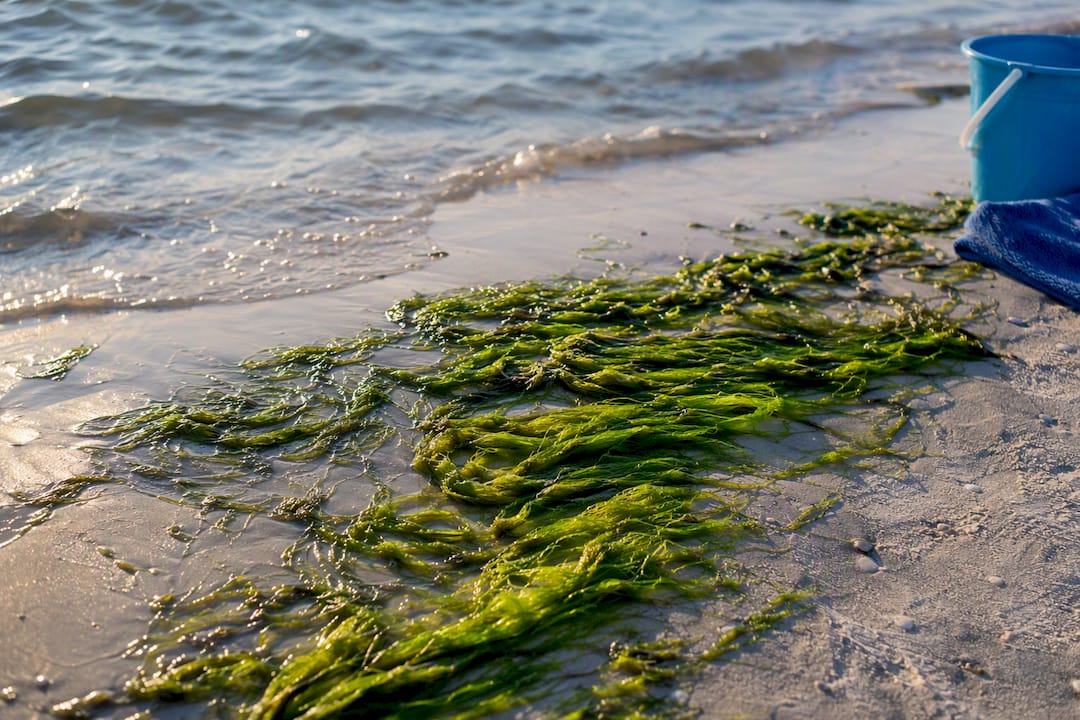
Yes, June grass commonly shows up along Gulf Shores beaches once the water warms up, and it’s generally harmless to swimmers. Check a live beach cam the morning of your trip, favor gulf-front access points away from inlets, and pack a rinse kit. Sources like NOAA Fisheries, UF/IFAS extension, and Gulfshoresalabama all point to the same conclusion: it’s a nuisance, not a hazard.
TL;DR:
June grass appears from late May to August, with heavier accumulations near inlets and during warmer water temperatures, especially in July.
It is locally rooted algae that floats to shore in slimy green mats, unlike sargassum, which is brown, buoyant, and drifts from offshore Gulf currents.
The presence and amount depend heavily on wind, tide cycles, and proximity to freshwater runoff, making beach conditions highly variable even within a short distance.
June grass is non-toxic and safe to swim through, but it can cause minor skin irritation and produces a sulfur smell when decomposing on the sand.
Checking live beach cameras and messaging local hosts before your visit provides the best real-time insight into current conditions and helps choose less affected access points.
Table of Contents
What Is June Grass, Exactly?
June grass isn’t grass at all. It’s the common nickname for Cladophora, a bright green, filamentous algae that clings to rocks, jetties, and the seafloor close to shore. When it’s rooted, you’d barely notice it. Once currents, waves, or boat traffic tear it loose, it floats up in slimy green clumps and drifts toward the beach, sometimes tangling around ankles or piling up in the wet sand.
UF/IFAS extension points out that this kind of algae actually benefits the coastal ecosystem even when it looks unpleasant on the sand. It’s food for small fish and crustaceans, and decomposing mats return nutrients to the beach and dune system.
A few quick facts worth knowing before you pack:
-
June grass typically appears from late May through August, although timing shifts year to year.
-
It grows attached to structures near shore rather than drifting in from open water.
-
It’s algae, not a plant, despite the “grass” nickname locals use.
June Grass Vs. Sargassum: What’s The Difference?
If you’ve researched seaweed in Gulf Shores before your trip, you’ve probably seen both terms and wondered if they’re the same problem. They’re not. June grass and sargassum look different, come from different places, and behave differently once they hit the beach.
June grass grows nearshore, attached to jetties or the seafloor, then breaks free into slimy, stringy green mats. Sargassum is a brown macroalgae that drifts in from the open Gulf, carrying small gas bladders that keep it floating like tiny buoys. That structural difference changes what you experience in the water and on the sand.
-
Color and texture: June grass is bright green and slick; sargassum is brown, coarser, and buoyant.
-
Origin: June grass grows locally near shore; sargassum drifts from offshore Gulf currents.
-
Beach impact: June grass tends to mat in shallow water and along the wet sand line; sargassum piles into thicker windrows and can smell stronger as it dries and rots.
Both are naturally occurring, but sargassum accumulations tend to draw more attention because the piles can get taller and the sulfur smell from decomposition is more pungent. For the science behind how nutrient runoff feeds these blooms, peer-reviewed research on coastal algal growth backs up what locals have observed for years.
When And Where Does June Grass Show Up?
The season window runs roughly late May through August, with occasional early or late appearances depending on how fast the Gulf warms. Once water temperatures climb into the mid-70s and 80s, Cladophora growth accelerates, and that’s when you’ll start seeing it break loose and wash up.
A few factors determine how bad it gets on any given day:
-
Water temperature. Warmer water speeds up algae growth, so June grass activity tends to build through early summer and peak in July.
-
Nutrient runoff near inlets. Freshwater outlets carry nutrients that feed algal blooms, so beaches closer to passes and bayous often see heavier accumulations than stretches farther from any inlet.
-
Wind and tide cycles. Onshore winds push floating algae toward the sand; offshore winds can clear a stretch within hours, according to the Emerald Coast Guide.
Conditions can vary dramatically from one mile of beach to the next, which is why a single bad report doesn’t mean your whole trip is affected.
Pro Tip: Check a local live beach cam before breakfast on the morning of your beach day. Conditions can shift with the tide, so what looked messy at sunset might be clear by 9 a.m.
Is June Grass Safe? What Visitors Should Know
June grass is generally non-toxic and has nothing to do with red tide, the harmful algal bloom that produces respiratory irritation and fish kills. That distinction matters for anyone comparing seaweed in Gulf Shores to more serious water-quality events they may have read about.
The real complaints are cosmetic and tactile rather than medical:
-
It’s slimy underfoot and can tangle around your legs while wading.
-
Decomposing mats on the sand produce a sulfur-like odor, especially on hot, still days.
-
People with sensitive skin occasionally report mild irritation after prolonged contact.
Some visitors with sensitive skin might notice minor irritation, though most beachgoers walk through it without any reaction at all. If you have an open cut or scrape, it’s smart to avoid direct contact and rinse thoroughly afterward. Outdoor showers at nearly every public beach access make this easy: rinse your feet and legs before heading back to your rental, and swap out swimwear rather than letting it sit damp in a beach bag.
Beach-Day And Rental Tips For Avoiding The Mess
Small choices make a big difference in how much June grass you actually encounter. Start with location. Beaches farther from passes, bayous, and river mouths generally see less nutrient-driven algae than spots right next to an inlet, since runoff near freshwater outlets is a known driver of local blooms. Gulf-front stretches with a steady offshore breeze tend to stay clearer, too.
Here’s a simple routine that works for most Michigan families visiting for the first time:
-
Check a live cam or local beach report before you load the car.
-
Aim for the early morning or late afternoon, when winds are often calmer and less likely to push algae ashore.
-
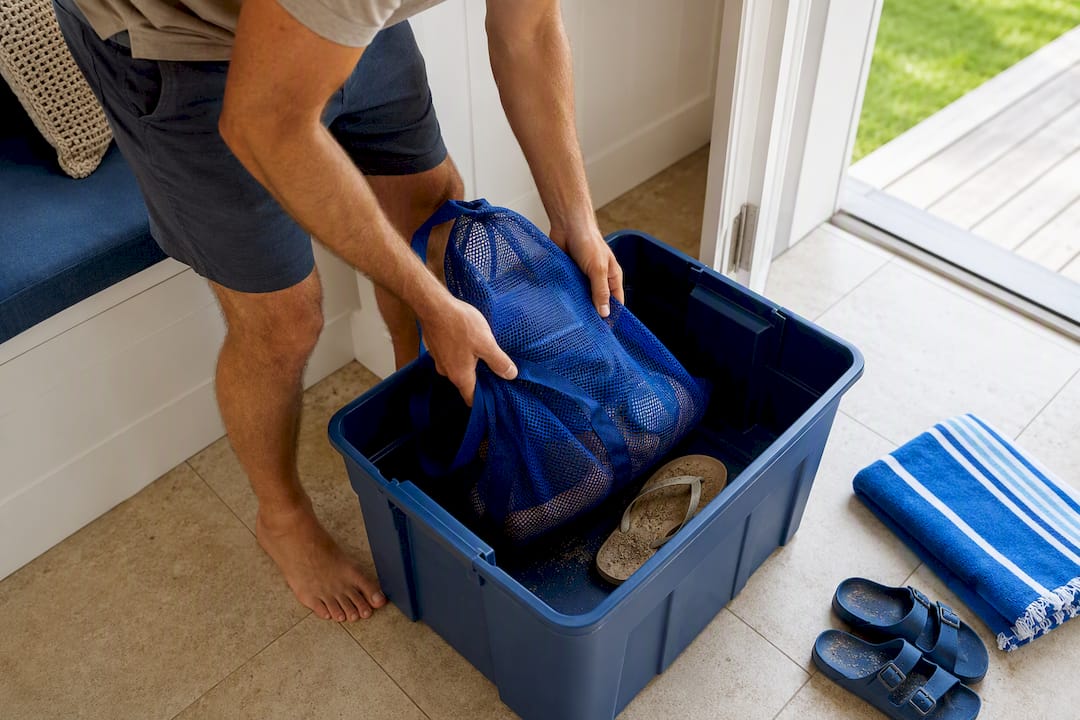
Bring water shoes, a small towel for rinsing, and a mesh bag to keep sandy, damp gear separate from clean items.
-
Use the outdoor shower before walking back into your rental.
If you’re staying at a vacation home rather than a hotel, protecting the property matters too. Shake out towels, mats, and beach chairs outside before bringing them in, keep the back door closed while you’re rinsing off, and if a mat of algae ends up tracked indoors anyway, let your host know so they can advise on cleanup.
Pro Tip: Pack a cheap plastic tote for wet, sandy gear. It keeps algae residue out of your rental car and off the rental home’s floors, and it makes packing for the drive back to Michigan a lot less messy.
A Host’s-Eye View On Handling June Grass
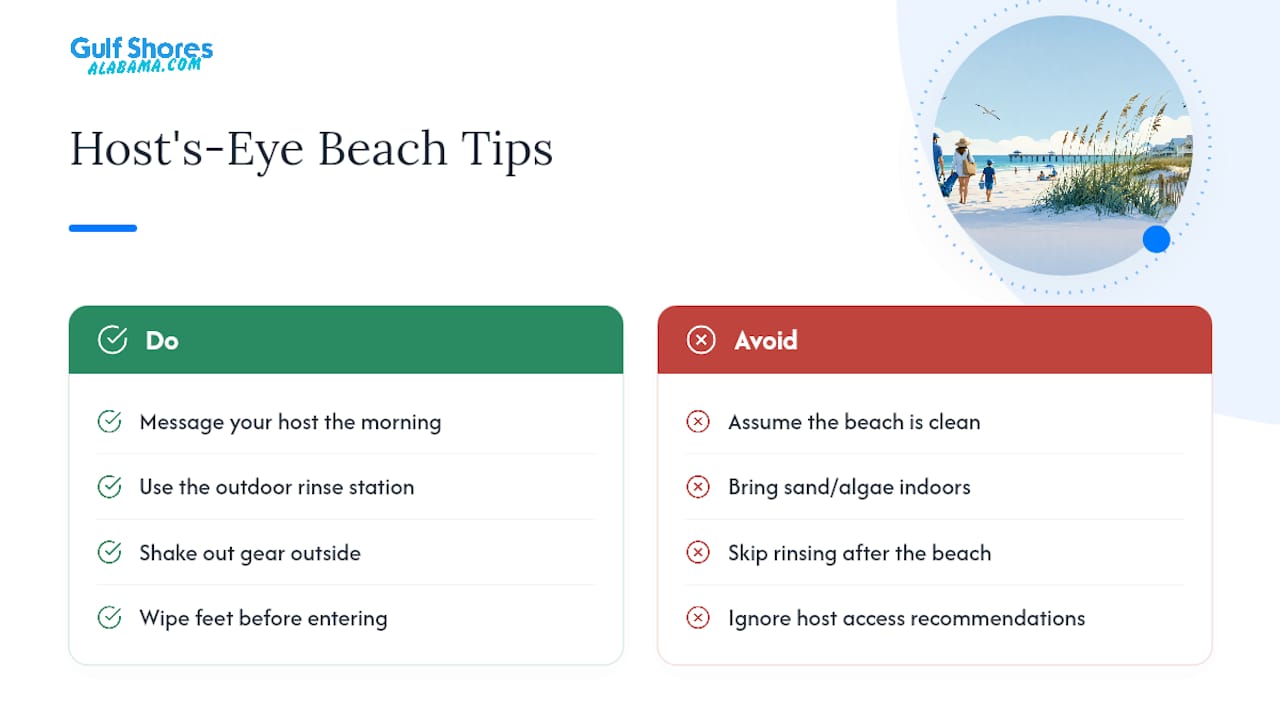
Hosts who list with Gulfshoresalabama see this question every summer: “Is the beach messy right now?” The honest answer is that it depends on the week, the wind, and how close a property sits to a pass or bayou. That’s why messaging your host the morning of your beach day is worth the thirty seconds. They’re often walking distance from the water and can tell you which access point looks clean that day.
Good hosts also set up a simple outdoor rinse station and leave a short guest note: rinse off, shake out gear outside, keep tracked-in sand and algae to a minimum. It’s a small habit that saves everyone a headache at checkout.
— Joe
Finding The Right Rental When June Grass Is Active
There are other ways to guess your way through this, like picking a hotel at random or hoping for the best. Gulfshoresalabama gives you something better: the ability to search actual properties by location and beach access before you book, so you’re not rolling the dice on a stretch of sand next to a busy inlet.
Browse Gulf Shores, Orange Beach, and Fort Morgan rentals and pay attention to listing notes about beach proximity and gulf-front placement. Properties like this gulf-front listing sit right on the sand, giving you an easy vantage point to judge conditions before you even walk down. Once you’ve booked, message your host directly. They live near the beach and can tell you which access point looks best that morning, something no automated booking site can offer. If a stretch looks messy, Gulf Shores has plenty of other things to do while you wait for the tide to turn. Start your search on the Gulfshoresalabama homepage and find a property that fits your crew.
Sources
Recommended
About the Author
Joe Godar of the GulfShoresAlabama.com Editorial Team creates destination guides, vacation-planning resources, and local travel content focused on Gulf Shores, Orange Beach, and Fort Morgan, Alabama.
Our team researches Alabama Gulf Coast beaches, vacation rental trends, family activities, local attractions, restaurants, events, and direct-booking best practices. Every guide is created to help travelers plan more confidently, discover the best of the Alabama Gulf Coast, and avoid unnecessary third-party guest service fees.
GulfShoresAlabama.com is part of the Emerald Coast by Owner marketing family, connecting travelers directly with verified vacation rental hosts throughout the Gulf Coast since 2016.
This article was reviewed for accuracy and updated using local destination research and current Alabama Gulf Coast vacation rental market insights.