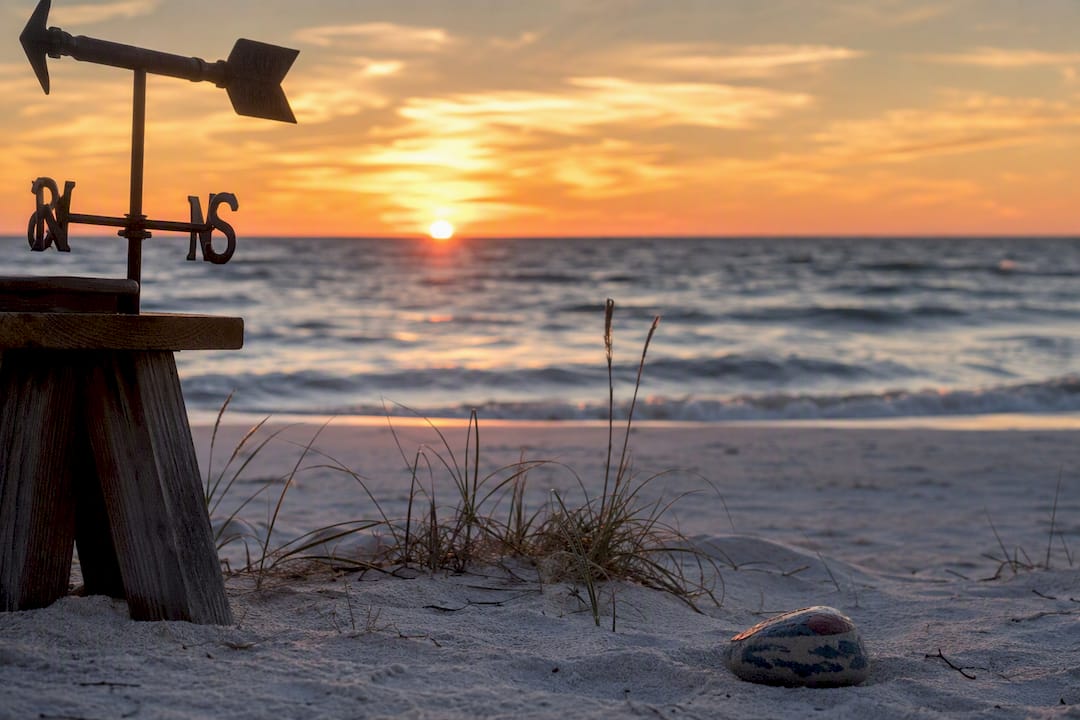
Late April through May and late September through October give you the best mix of warm days, cooler nights, and lower humidity along the Alabama coast. Summer, especially July, brings the hottest air and the most rain, though the Gulf itself is warmest and swim-ready from May through November. If you’re booking around hurricane season, which runs June 1 through November 30, plan your dates with that window in mind.
TL;DR:
Shoulder-season months of late April to May and late September to October typically provide the best weather with warm temperatures and lower rain levels.
July experiences the warmest sea temperatures around 85 to 86°F but also the highest rainfall, averaging 9.1 inches.
Hurricanes peak from mid-August through October, so fall trips require monitoring weather forecasts and confirming rental storm preparedness.
Summer months from June to August see high humidity that makes 90°F days feel closer to 100°F, requiring careful planning for outdoor activities.
Booking early for peak periods like spring break or summer ensures better availability and rates, especially for shoulder-season weeks.
Table of Contents
-
Gulf Shores Weather by Month: Temperatures, Rain, and Sea Conditions
-
Planning Your Trip From Kansas: What to Expect on the Ground
-
Humidity by Month: Why It Feels Hotter Than the Thermometer Says
Gulf Shores Weather by Month: Temperatures, Rain, and Sea Conditions
The numbers below reflect 30-year station averages for temperature and precipitation, paired with sea-surface readings that matter most if a beach vacation without swimming feels incomplete to you. These are long-term averages, not a forecast for your specific week, but they’re the most reliable baseline for choosing dates from Wichita or Topeka months in advance.
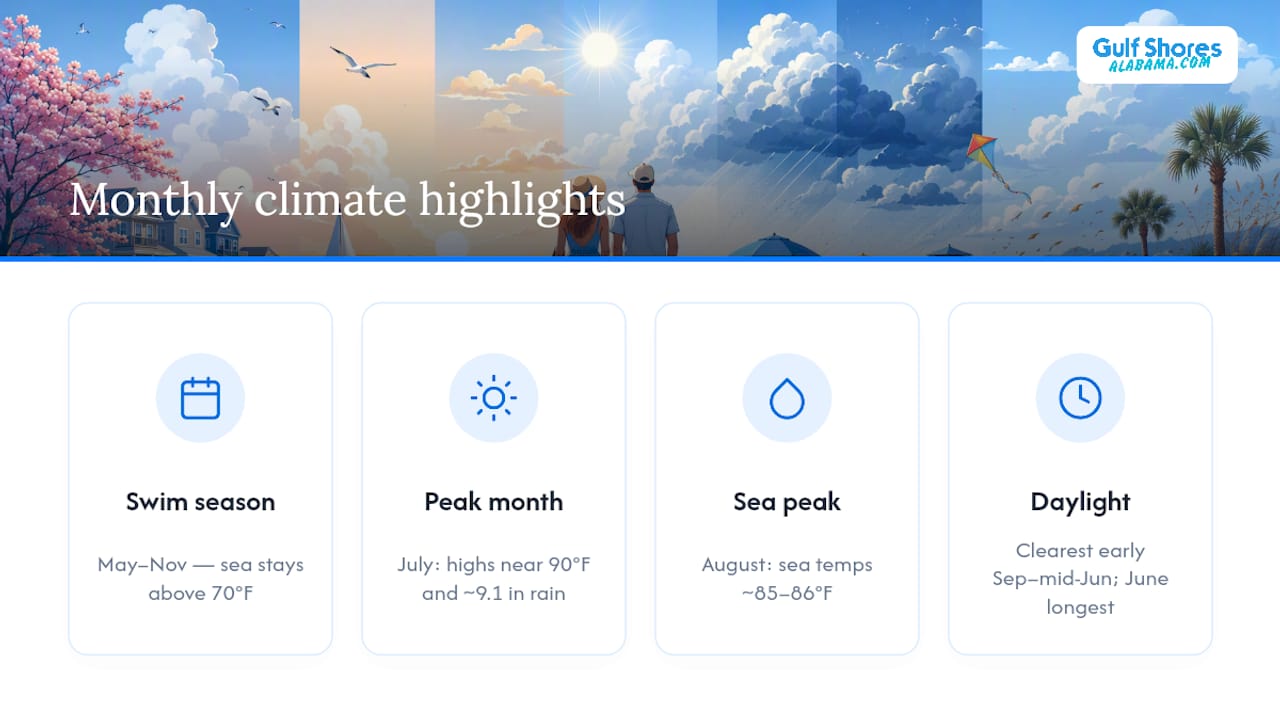
Geostat shows July as the hottest month, with highs near 90°F, and also the wettest, with monthly precipitation averaging around 9.1 inches. That combination surprises a lot of first-time visitors from Kansas: the same month that delivers the warmest swimming water also delivers the most afternoon downpours, usually short, loud thunderstorms that clear within an hour.
Sea temperatures tell a different story than air temperatures. According to Seatemperature, the Gulf peaks around 85 to 86°F in August and stays above 70°F from May through November, so the swim season runs far longer than most inland travelers expect. Daylight patterns, tracked by Timeanddate, show the clearest stretch running roughly early September through mid-June, with June carrying the longest daylight hours of the year.
Which Months Give You the Best Weather for Your Trip?
Your ideal month depends on what you’re optimizing for: beach time, low rain odds, thinner crowds, or a lighter price tag. Two shoulder windows, early April through late May and late September through late October, consistently deliver the best balance of warm days, manageable humidity, and fewer storm interruptions.
-
Best overall balance: Late April to mid May, or late September to late October; warm without the peak heat, and rain totals drop well below the July high.
-
Warmest water for swimming: July through September, when the Gulf sits in the low to mid 80s, though July also brings the heaviest rain.
-
Fewest crowds: January and February, when temperatures stay mild for a beach town but too cool for most people to swim comfortably.
-
Best for surf and fishing: Fall shoulder months, when cooling water temperatures push baitfish activity and produce more consistent wind patterns for casting and light surf.
Families tied to school calendars often land in June or early August, both workable, just plan for higher humidity and a stronger chance of afternoon storms. Snowbirds heading south from Kansas for extended winter stays tend to favor December through February, trading swim weather for quiet beaches and lower nightly rates.
What to Pack and Do Each Month
What you pack should track the season, not just the calendar month. Here’s how to build a bag that actually matches what you’ll face on the ground.
-
Spring shoulder (April, May): Light layers, a rain shell for passing showers, reef-safe sunscreen, and a light jacket for breezy evenings.
-
Summer (June through August): Breathable, quick-dry fabrics, a wide-brim hat, and a compact rain poncho for the daily afternoon storm window.
-
Fall shoulder (September, October): A mix of short sleeves and a light layer for cooler mornings, plus water shoes if you’re planning surf fishing.
-
Winter (November through February): A real jacket for evening walks, closed-toe shoes, and layers you can shed if a warm afternoon shows up.
Swimming, boating, and paddleboarding peak May through October, while spring and fall are prime windows for fishing charters and boat trips. Winter rewards patient travelers with birding, quiet beach walks, and family-friendly attractions without the summer lines.
Pro Tip: Humid Gulf heat feels far heavier than dry Kansas heat at the same number on the thermometer. In July and August, plan outdoor activities before 11 a.m. or after 5 p.m., and carry more water than you think you’ll need.

Hurricane Season: What Kansas Travelers Should Know
Hurricane season runs June 1 through November 30, and Baldwin County has experienced many federally declared disasters related to tropical systems over time. That history is exactly why the City of Gulf Shores publishes formal hurricane preparedness guidance for residents and visitors alike.
Statistic Callout: Seasonal hurricane risk isn’t spread evenly across the six-month window. Colorado State University’s Tropical Meteorology Project shows activity along the Gulf Coast typically climbs from mid-August through October, the peak stretch for landfall probability.
If your trip falls inside that window, a short checklist goes a long way:
-
Monitor the National Weather Service and City of Gulf Shores channels in the days before and during your stay.
-
Confirm your rental’s storm amenities, covered parking, shutters, flashlights, before you book.
-
Buy travel insurance that specifically covers weather-related cancellations, not just trip delay.
-
Pack a basic 72-hour kit: water, snacks, a flashlight, phone bank, and copies of key documents.
None of this should scare you off a summer or fall trip. It just means you plan the way locals do, prepared but not anxious.
Planning Your Trip From Kansas: What to Expect on the Ground
Coastal air behaves differently than what you’re used to in Wichita or Kansas City. Sea breeze moderates afternoon heat near the beach itself, but humidity makes even a 75°F day feel stickier than a dry 85°F day back home. Local microclimates also mean conditions can shift within a few miles of the coastline, so Gulf Shores-specific data serves you better than a general Alabama forecast.
Booking timing matters as much as the month you pick:
-
Reserve beachfront units for spring break or peak summer at least four to six months out.
-
Shoulder-season stays often open up with more flexible rates closer to your travel date.
-
Check spring break planning guidance if you’re traveling with kids during a school break window.
-
Review drive and flight time from the Midwest before locking in dates, since travel logistics affect which shoulder week makes sense.
Humidity by Month: Why It Feels Hotter Than the Thermometer Says
Humidity, not just temperature, drives how a Gulf Shores day actually feels on your skin. Winter months, December through February, run relatively dry for the region, which keeps mornings crisp and evenings comfortable for walking the beach. Spring humidity climbs steadily through April and May, still tolerable, but noticeably thicker than a Kansas spring.
Summer is where humidity becomes the story. June through September carry the year’s heaviest moisture load, and that’s what makes 90°F days in July feel closer to 100°F once you factor in the heat index. Afternoon thunderstorms actually help a little, clearing some of that moisture temporarily before it builds back up by the next morning.
Fall offers relief starting in October, when humidity begins dropping alongside the temperature, and by November the air feels distinctly lighter. If sticky heat bothers you more than most people, that’s one more reason the shoulder seasons outperform peak summer for comfort, not just for lower rain totals.
Wind Patterns and Conditions Month by Month
Wind along the Alabama coast tends to run light to moderate most of the year, generally in the 8 to 12 mph range, with the Gulf’s sea breeze creating a predictable daily rhythm rather than sustained strong gusts. Afternoon breezes off the water are common in spring and summer, a welcome counterbalance to the heat and humidity during peak swim season.
Fall and winter bring more variability. Cold fronts moving through the region between October and February can push wind speeds higher for a day or two at a time, which matters if you’re planning boating, paddleboarding, or fishing charters. Those fronts also tend to clear out humidity behind them, part of why fall days often feel crisper once a front passes.
Hurricane season introduces the year’s most significant wind events, though sustained tropical-storm-force winds are the exception rather than the rule for any given week. Most days, even during the June through November window, bring nothing more dramatic than a stiff onshore breeze that’s actually pleasant for beach time. Checking a short-range local forecast a few days before your trip gives you a far more accurate read on wind conditions than any monthly average can.
How Often Do Storms and Severe Weather Happen Each Month?
Afternoon thunderstorms are a near-daily feature of summer in Gulf Shores, particularly June through August, when Gulf moisture and daytime heating combine almost every afternoon. These storms are typically brief, often 30 to 60 minutes, and tend to roll through by early evening, so they rarely wipe out a full day of vacation.
Spring, March through May, brings a different kind of severe weather risk: fast-moving frontal systems that can produce stronger, more organized storms than the pop-up summer variety. These are less frequent than summer’s daily storm pattern, but they can be more intense when they arrive.
Tropical systems represent the most consequential severe weather category, concentrated in the June through November hurricane season and peaking from mid-August through October. Winter months, December through February, see the lowest overall frequency of severe weather, with occasional strong cold fronts producing gusty conditions but rarely anything resembling a summer storm cell or a tropical threat.
What Hosting Guests Through Every Season Has Taught Us
Guests from Kansas tend to rebook the same shoulder-season weeks year after year, drawn back by warm water and manageable humidity rather than peak summer crowds. Summer travelers usually ask about pools and covered parking; winter guests ask about fireplaces and quiet beach access. Browsing sample listings and the things-to-do guide shows that pattern clearly across property types.
— Joe
Book Your Gulf Shores Stay Around the Weather That Fits You
Gulfshoresalabama gives you direct access to owners and property managers, so you can confirm storm-ready amenities, covered parking, pet policies, and pool access before you commit to dates, without a middleman guessing on your behalf. Whether you’re eyeing a quiet December week or a swim-heavy stretch in June, our inventory spans beachfront condos, private homes with pools, and pet-friendly cottages suited to families, couples, and snowbirds alike.
If shoulder-season dates like late April or early October fit your calendar, those weeks tend to book up fast among repeat Kansas guests. Start by checking availability on our Vacation Rentals search page or browse a family-friendly beachfront listing to see what fits your dates and budget. For extra help timing your trip around travel logistics, our partners at Pilottraveldeals break down why shoulder-season travel tends to stretch your budget further, too.
Sources
Recommended
About the Author
Joe Godar of the GulfShoresAlabama.com Editorial Team creates destination guides, vacation-planning resources, and local travel content focused on Gulf Shores, Orange Beach, and Fort Morgan, Alabama.
Our team researches Alabama Gulf Coast beaches, vacation rental trends, family activities, local attractions, restaurants, events, and direct-booking best practices. Every guide is created to help travelers plan more confidently, discover the best of the Alabama Gulf Coast, and avoid unnecessary third-party guest service fees.
GulfShoresAlabama.com is part of the Emerald Coast by Owner marketing family, connecting travelers directly with verified vacation rental hosts throughout the Gulf Coast since 2016.
This article was reviewed for accuracy and updated using local destination research and current Alabama Gulf Coast vacation rental market insights.