
Beach flags at Gulf Shores warn you about surf, currents, and marine pests, but one rule matters more than the rest: double red means the water is closed, and entering the Gulf is illegal when those flags fly. Flags update throughout the day, lifeguards work seasonally, and the city government treats double red as an enforceable rule, not a suggestion.
TL;DR:
Double red flags mean the water is closed, and entering the Gulf during these times is illegal and punishable by fines or arrest.
A purple flag indicates the presence of marine pests like jellyfish and stingrays, often flying alongside other hazard flags.
Daily updates from official reports are essential, as flags can change multiple times a day depending on surf, wind, or marine life conditions.
Lifeguarded zones, marked by red and yellow paired flags, are the safest areas for swimming during operational hours.
Absence of a flag does not guarantee safety; always verify current conditions with officials before entering the water.
Table of Contents
-
How to Check Today’s Flag and Lifeguard Coverage Before You Head Out
-
What to Do When You See Each Flag (and How to Escape a Rip Current)
-
The Local Rules Behind the Flags (and Why “No Flags” Isn’t a Green Light)
-
How Gulf Shores Vacation Rentals Helps You Plan a Safer Stay
What Do the Gulf Shores Beach Flags Mean?
Gulf Shores uses a color code you’ll see posted at every public beach access point and flown from lifeguard towers. Here’s what each flag communicates and how seriously you should take it.
-
Green: Signals low hazard when local officials use it, but the USLA doesn’t include green in its national standard, since a calm-looking flag can make swimmers assume “safe” when conditions can still shift fast.
-
Yellow: Medium hazard. Expect moderate surf or currents, and swim with extra caution, especially with kids or weak swimmers nearby, according to Alabama Public Health.
-
Red: High hazard. Strong surf or currents make swimming dangerous for most people, and only experienced swimmers should even consider the water.
-
Double red: Water closed to the public. This isn’t a caution, it’s a prohibition, and entering the Gulf during double red inside Gulf Shores city limits is illegal.
-
Purple: Marine pests in the water, typically jellyfish or stingrays, not sharks specifically. Purple often flies alongside a hazard flag to warn of both rough water and stinging critters at once.
You’ll also run into combined and specialty flags that trip up first-time visitors. A red flag paired with a yellow flag marks the lifeguarded swim zone, the safest stretch of sand to be in when lifeguards are on duty. Red paired with purple means dangerous surf plus marine pests, a combination that should keep almost everyone on the sand. Yellow with purple signals moderate hazard with jellyfish or stingrays present, manageable for confident swimmers but worth a second thought for kids. Beyond the core colors, watch for a red and white flag marking an emergency evacuation zone, a black and white checkered or quartered flag marking a surfboard and watercraft zone, a yellow flag with a black ball restricting inflatables and small craft, and an orange windsock that signals wind conditions relevant to boaters and kiteboarders.
How to Check Today’s Flag and Lifeguard Coverage Before You Head Out
Flags aren’t static. Local officials monitor conditions throughout the day and change the flag as surf, wind, or marine life reports shift, so checking once in the morning isn’t enough if you’re heading back to the beach in the afternoon.
-
Check the Gulf Shores & Orange Beach daily beach report before you leave your rental. It lists the current flag, surf height, rip current risk, water temperature, and tide times.
-
Review the City of Gulf Shores beach safety page for official rules, including the double red prohibition and any seasonal notices.
-
Check the National Weather Service beach forecast for rip current risk specific to your date.
-
Look for lifeguard towers once you arrive. Lifeguards work a seasonal schedule roughly March through October, and staffed towers cluster around protected public zones like Gulf Place, West 6th Street, and Lagoon Pass.
-
If you can’t verify conditions online, ask the nearest lifeguard directly rather than guessing from the flag alone.
What to Do When You See Each Flag (and How to Escape a Rip Current)
Knowing the color is only half the job. Here’s how to act on it.
-
Yellow flag: Swim close to shore, keep young or inexperienced swimmers within arm’s reach, and skip flotation toys that can drift into deeper water.
-
Red flag: Stay out unless you’re a strong, experienced swimmer, and never swim alone even then.
-
Double red flag: Stay out of the water entirely. This one’s non-negotiable, both for your safety and because it’s the law within Gulf Shores.
-
Purple flag: Watch where you step and swim, since jellyfish and stingrays tend to cluster near seagrass and sandbars, and shuffle your feet in shallow water to avoid a stingray strike.
If you ever get caught in a rip current, don’t fight it head-on. The National Weather Service recommends floating or treading water first to stay calm, then swimming parallel to the shore until you’re out of the current’s pull, then angling back toward the beach once you’re free. Wave your arms and yell if you need help. Call a lifeguard immediately if one is nearby; if not, call 911 and report your exact location, a description of the person in trouble, and their condition.
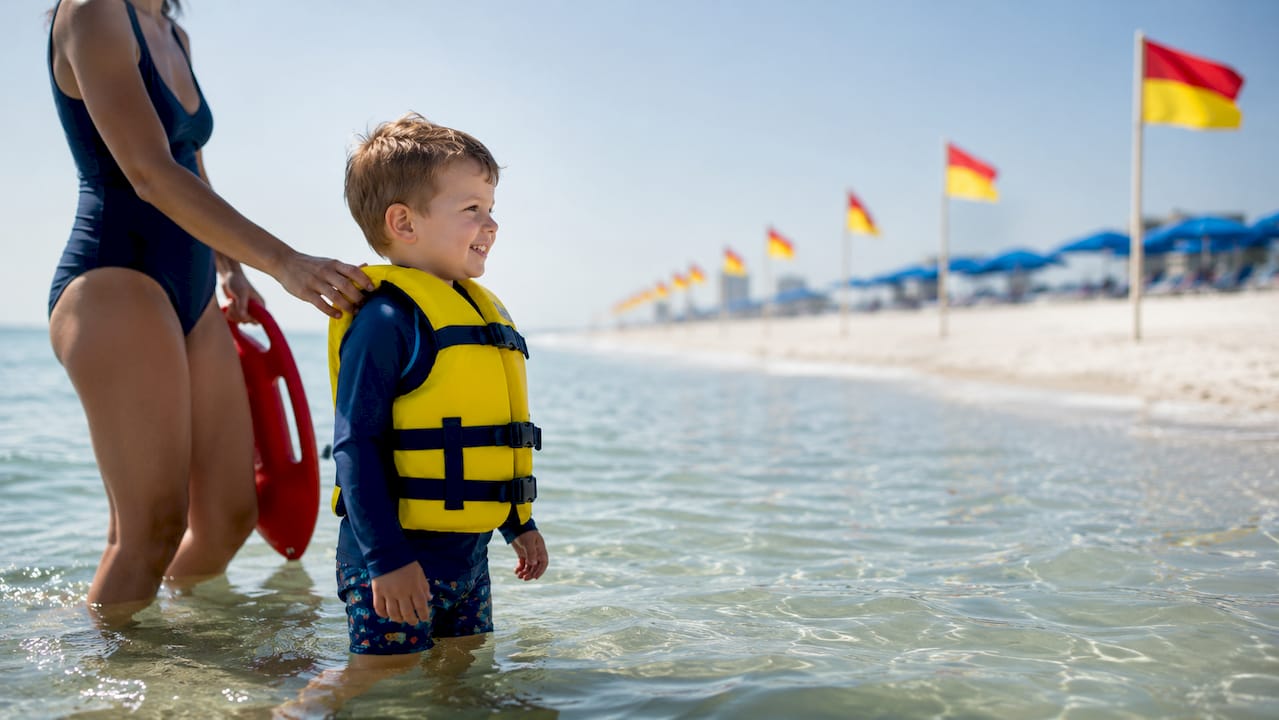
Pro Tip: If you’re traveling with kids or shaky swimmers, put them in a coast guard approved life jacket and stick to the red/yellow lifeguarded zone, even on days that look calm. Lifeguards can only watch what’s inside their flags.
The Local Rules Behind the Flags (and Why “No Flags” Isn’t a Green Light)
Double red isn’t a courtesy warning in Gulf Shores. City ordinance makes it illegal to enter the Gulf when double red flags are flying, and violators face fines or arrest.
That legal weight is exactly why the smartest move on any beach day is sticking to a lifeguarded zone. Gulf Place, West 6th Street, and Lagoon Pass are the recommended public areas where lifeguards are on duty during the seasonal coverage window, and swimming inside their red/yellow paired flags puts you under active supervision.
Absence of flags does not mean the water is safe. Conditions vary beach to beach and can change before a flag gets swapped out, so always confirm current status with officials rather than assuming an empty flagpole means clear water.
How Gulf Shores Vacation Rentals Helps You Plan a Safer Stay
Local knowledge matters as much as the flags themselves, and that’s the gap Gulfshoresalabama fills for visitors booking a stay along this coast. Beyond listing beachfront condos and family-friendly cottages, the site’s guides cover exactly which stretches of sand, like the top family beaches, sit closest to lifeguarded zones.
On double red or heavy purple flag days, a rental with a private pool keeps your vacation moving without putting anyone in the closed Gulf. Booking near Gulf Place or West 6th Street also puts you steps from active lifeguard coverage every day the flags are green through yellow.
Book Your Stay Near Gulf Shores’ Safest Swim Zones
Reading the flags right is only useful if you’re staying somewhere that puts you close to the beaches worth swimming at. Gulfshoresalabama’s vacation rental listings cover everything from beachfront condos near Gulf Place to quiet cottages a short drive from Lagoon Pass, so you can pick a home base that matches how you actually want to spend your beach days. If you want a specific option to start with, browse this beachfront property or check current availability across the whole Gulf Shores, Orange Beach, and Fort Morgan area. For general beach-day habits beyond flags, like sun protection and family logistics, Flight of Aloha’s beach resort guide rounds out some useful, broader safety thinking.
A Local Perspective on Reading the Flags
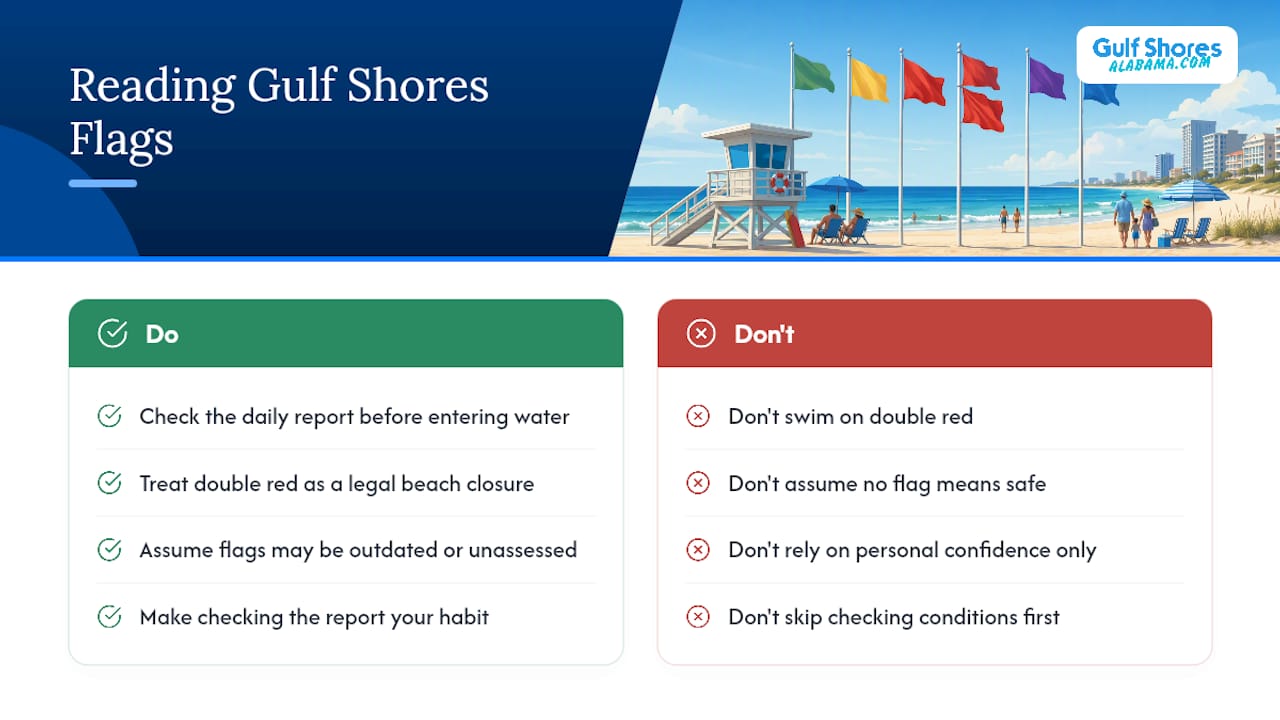
Most beach flag explainers treat every color as equally optional, a menu of suggestions you weigh against how confident you feel that day. That framing breaks down completely at double red. Gulf Shores doesn’t leave that call to your judgment. It’s written into city rules, backed by fines and arrest, and that distinction gets buried in most generic beach-safety content that treats Alabama’s Gulf Coast the same as anywhere else.
The bigger gap I see is how visitors treat the absence of a flag. People assume no flag or a green flag means carefree swimming, when it just means nobody’s updated the pole yet or conditions haven’t been assessed for that stretch of sand. If you take one thing from this guide, make it this: check the daily report before you walk down, not after you’re already in the water. Everything else, the colors, the combinations, the marine pests, matters less than that one habit.
— Joe
Sources
Recommended
About the Author
Joe Godar of the GulfShoresAlabama.com Editorial Team creates destination guides, vacation-planning resources, and local travel content focused on Gulf Shores, Orange Beach, and Fort Morgan, Alabama.
Our team researches Alabama Gulf Coast beaches, vacation rental trends, family activities, local attractions, restaurants, events, and direct-booking best practices. Every guide is created to help travelers plan more confidently, discover the best of the Alabama Gulf Coast, and avoid unnecessary third-party guest service fees.
GulfShoresAlabama.com is part of the Emerald Coast by Owner marketing family, connecting travelers directly with verified vacation rental hosts throughout the Gulf Coast since 2016.
This article was reviewed for accuracy and updated using local destination research and current Alabama Gulf Coast vacation rental market insights.