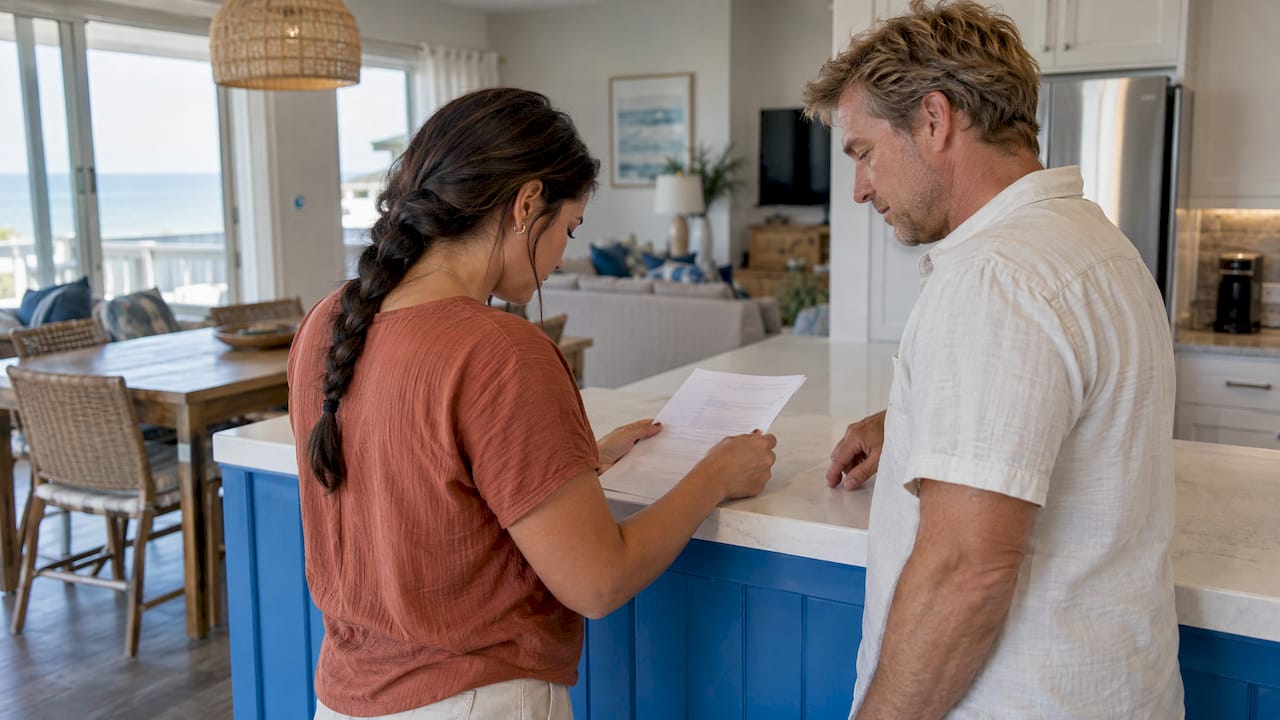
For a vacation rental in Gulf Shores, Orange Beach or Fort Morgan, your deposit refund is decided by the rental agreement you sign, not by a one-size-fits-all state rule. That is good news when you book directly with the owner: you can read the deposit terms, ask questions and settle the details before you pay, with no middleman between you and the person who returns your money. On Gulf Shores Vacation Rentals by Owner, travelers contact owners and managers directly and book without guest service fees, so the deposit conversation happens with the people who actually hold the funds.
Below you will find what kinds of deposits exist, which law applies (and which does not), when a refund should arrive, what an owner can fairly keep, and what to do if your money is late.
TL;DR
- A short beach stay in Alabama is generally outside the state’s residential security deposit statute, so the rental agreement sets the deposit amount, the return date and the cancellation refund terms.
- Read the deposit section before you pay, and ask the owner to confirm in writing how much is held, when it is released and what it covers.
- Photograph the unit at check-in and checkout. Timestamped photos are the simplest way to protect a full refund.
- Stays of 30 days or longer (a snowbird winter, for example) can fall under state security deposit rules, including itemized deductions.
- If a refund is late or unexplained, start with the owner in writing, then use your card issuer if needed.
Table of Contents
- Three different charges that get called “the deposit”
- Which law applies to a beach vacation stay
- What the rental agreement should say about your deposit
- When your refund should arrive
- What an owner can keep, and what they should not
- How to protect a full refund: the guest routine
- If your refund is late or less than you expected
- Why booking direct makes deposits simpler
- Find your Gulf Shores rental and ask the deposit question first
- FAQ
- Sources
Three different charges that get called “the deposit”
Most refund confusion starts with vocabulary. A vacation rental booking can include several separate charges, and only one of them is meant to come back to you.
| Charge | Refundable? | What it is for |
|---|---|---|
| Security or damage deposit | Yes, if the unit is left in good condition | Covers damage beyond normal use, missing items or unusual cleaning |
| Damage waiver | Usually no | A fee that replaces the refundable deposit and may come with a coverage limit |
| Cleaning fee | Usually no | Pays for the turnover cleaning after your stay |
One host-side guide describes a refundable deposit as money that is held rather than earned: if nothing goes wrong, the guest gets it all back. A waiver or cleaning fee works the other way: you pay it, and it is gone whether you leave the place spotless or not.
When you compare two Gulf Shores condos, compare them on all three lines. A listing with a low nightly rate and a large deposit can cost you more cash up front than one with a higher rate and a small hold. And a waiver in place of a deposit means you have nothing to “get back”, so you want to know that before you book rather than at checkout.
Which law applies to a beach vacation stay
Here is the part that surprises many renters. When people search for deposit refund rules, the results are full of landlord-tenant law: return deadlines, itemized statements, penalties for late refunds. Those rules are written for people who live in a home on a lease.
Alabama’s residential landlord-tenant statute, the Uniform Residential Landlord and Tenant Act, covers the security deposit rules in Alabama Code § 35-9A-201. It lets a landlord apply a deposit to unpaid rent and to damage caused by the tenant’s failure to follow the rental agreement, and it requires a written, itemized list of anything withheld within 60 days after the tenancy ends and possession is returned.
The same act leaves out transient occupancy in a hotel, motel or lodging. One Alabama rental-agreement resource explains that a short vacation stay generally falls outside the deposit statute, and that the agreement itself sets the deposit, its return date and any cancellation refund. A regional policy review of short-term rental rules also found that Alabama has no comprehensive statewide framework for these rentals and leaves most operating decisions to local governments, with recent legislative attention going to marketplace damage guarantees rather than deposit refund deadlines.
What that means for you:
- For a week at the beach, your protection is the written agreement. Read it like a contract, because it is one.
- For a month or more, the picture changes. A tenant-rights guide notes that when a stay reaches 30 days or longer, state security deposit law can apply, including a return deadline, itemized written deductions and no charges for normal wear and tear. If you are a snowbird planning a winter in Gulf Shores, raise this with the owner when you discuss terms.
This is general information, not legal advice. If you have a dispute over a larger sum, an Alabama attorney or your local consumer protection office is the right person to ask.
What the rental agreement should say about your deposit
Because the agreement carries so much weight, it pays to know what a clear one includes. Before you send a payment, look for each of these items and ask the owner to fill in any that are missing:
- The amount held and whether it is charged to your card or collected another way.
- When it is collected. Some owners charge at booking, others place a hold shortly before arrival.
- When it is released. A specific number of days after checkout is better than “promptly”.
- What it can be used for: damage, missing items, extra cleaning, rule violations.
- How you will be told if any part is kept, and whether photos or receipts come with the explanation.
- Pet terms. Pet-friendly homes often handle pets with a separate fee or deposit, so check how it works. You can browse pet-friendly rentals and read our guide to pet-friendly beach house rentals in Gulf Shores before you ask.
- Cancellation refunds. Which payments come back if you cancel, and by what date.
This is where booking direct helps. When you message an owner or property manager yourself, you get answers from the person who wrote the policy. You are not trying to decode a form on a large travel site while the owner’s real terms sit somewhere else. Every item above can be settled in a short email thread, and that thread becomes part of your record.
When your refund should arrive
Because there is no single statutory clock for a short stay, timing comes from the agreement. Industry guidance for hosts tends to point toward quick releases: one payment-timing guide suggests that releasing the hold within a few days of checkout is a reasonable standard once the unit has been inspected. Treat that as a common practice you can ask for, not a guaranteed right.
Here is a realistic way to think about the timeline:
- Checkout day: the owner or manager (or a cleaner on their behalf) walks through the unit.
- A few days later: a good owner releases the hold or sends the refund, or contacts you about a problem.
- Bank processing: even after the owner acts, your card issuer or bank can take several business days to show the money. A refund that has been sent is not the same as a refund that has landed.
- Long stays: if state deposit law applies to your 30-day-plus stay, the Alabama statute’s outer limit is 60 days for returning the deposit or sending an itemized list of deductions.
Ask the owner for the release timeframe before you book. If the answer is vague, ask for a number of days. Owners who run their own rentals generally appreciate guests who read the terms, and a clear answer sets the right expectation for both sides.
Card holds versus charges
Some owners do not take your money at all, they place an authorization hold on your card. The hold reduces your available credit for a while and then drops off. In that case there is no “refund” to wait for, just a release. If you are booking several nights on a travel budget, keep that reduced credit in mind. Other industries run into the same questions about holds and timing, and a look at how charter deposits work shows the pattern: confirm the amount, the hold window and the release date in advance.
What an owner can keep, and what they should not
The fair standard for a refundable deposit is simple: it covers real damage you caused, not ordinary use. Alabama’s residential statute reflects that idea, allowing deductions for rent owed and damage from noncompliance with the agreement. Residential guides also list items that generally cannot come out of a deposit: routine upkeep, standard post-stay cleaning and issues unrelated to your occupancy.
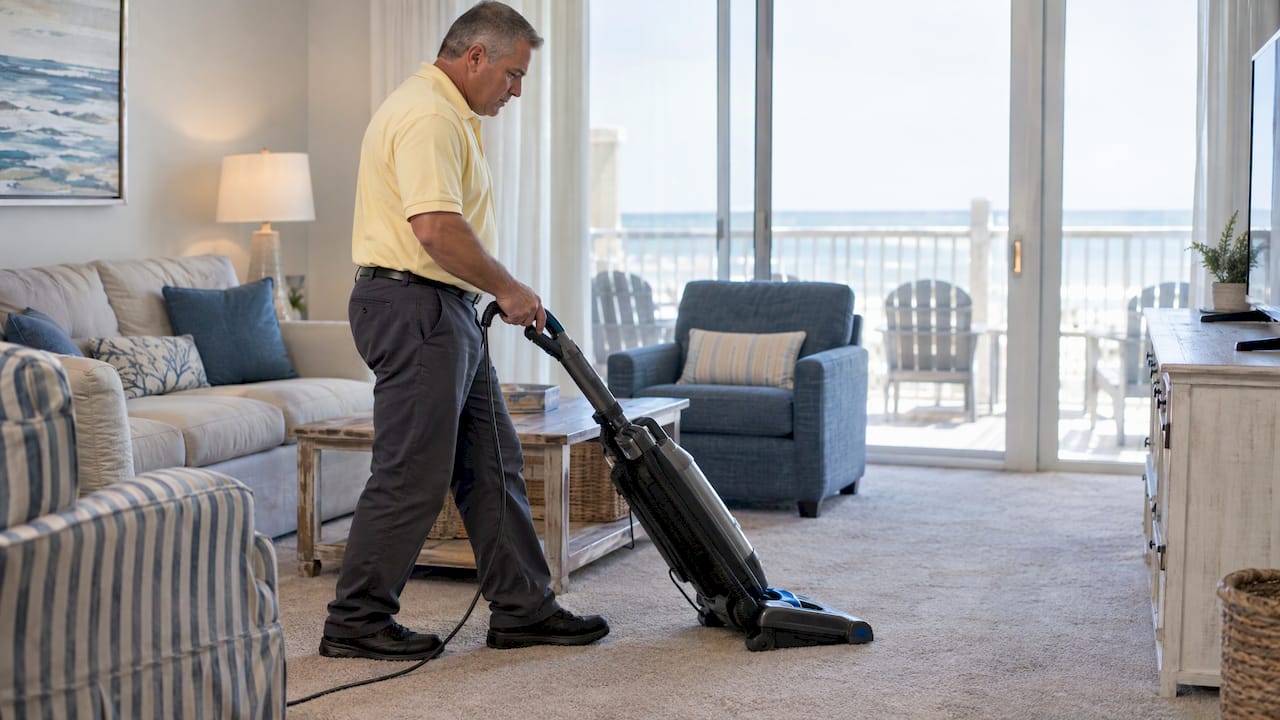
On a beach stay, those lines look like this:
Normal use (should not be deducted)
- Sand in the entryway and on the floors
- Wet towels and ordinary laundry
- Light wear on beach chairs and outdoor furniture
- Small scuffs from luggage
Damage or missing items (can reasonably be deducted)
- A broken lamp, cracked tile or torn screen
- Stains that need professional treatment
- Missing linens, remotes or beach gear that came with the home
- Pet damage or smoke odor where the agreement prohibits them
Proportion matters. A host-side guide gives the example that a small stain should mean a small charge, not a full-deposit keep, and advises sending an itemized breakdown with photos. If you receive a deduction that is far out of line with the problem described, say so politely and ask for the supporting detail.
How to protect a full refund: the guest routine
A full refund is the normal result for guests who leave the home in good order. These steps make it easy to prove.
- Save the agreement and the messages. Keep the deposit terms, any emails with the owner and your booking confirmation in one folder.
- Photograph everything at check-in. Do it the day you arrive, before you unpack. Capture floors, furniture, bathrooms, appliances, balcony or deck, and any existing marks. Tenant-rights guidance recommends reporting pre-existing damage to the host promptly, within the first hour if you can. Send the photos by email or message so the timestamp is on record.
- Report problems when you find them. A broken screen door on arrival is the owner’s issue. A broken screen door you never mentioned looks like yours.
- Follow the checkout list. Trash out, dishes done or loaded as the home requests, doors and windows locked, keys returned the way the owner asked.
- Photograph again at checkout. Same rooms, same angles.
- Ask for confirmation. A short message such as “We’ve checked out and the home is in good condition, when should we expect the deposit release?” starts the clock in writing.
The whole routine takes about fifteen minutes and is the best protection you have, particularly in a state where no statutory walkthrough is required. One Alabama deposit summary also points out that move-in and move-out photos are the practical safeguard because the law does not require a formal inspection.
If your refund is late or less than you expected
Most delays are administrative: a busy turnover day, a cleaner who has not yet reported, a bank that is slow. Work through these steps in order.
- Wait through the window in your agreement, then add a few business days for bank processing.
- Write to the owner or manager. Be specific: dates of stay, amount held, the release date in the agreement, and a request for the refund or an itemized explanation.
- Ask for the basis of any deduction. A description of the damage, photos and the cost of repair or replacement are reasonable things to request.
- Send your own photos if the claim covers something your check-in or checkout images show was fine.
- Use your card issuer. If the owner does not respond and you paid by credit card, tenant-rights guidance notes that escalating through your card issuer is the next route. Keep the agreement, your photos and your messages ready, since the issuer will ask for them.
- For a long stay under state deposit law, or a sum large enough to matter, speak with an Alabama attorney about your options.
Paying by credit card, and keeping your communication in writing from the start, makes every one of these steps easier.
Why booking direct makes deposits simpler
Deposit disputes grow from two things: unclear terms and unclear communication. Booking directly addresses both.
- You talk to the decision-maker. The owner or manager who set the deposit can explain it, adjust a detail or confirm a date in the same conversation.
- No guest service fees. Travelers on our site book directly with owners and managers and pay no guest service fees to the marketplace, so the money you put down goes toward your stay and your deposit terms, not a platform’s markup.
- Everything is in one thread. Your questions, the owner’s answers and your photos live in your own message history.
- One place to compare. Condos, beach houses, cottages, townhomes and studios across Gulf Shores, Orange Beach and Fort Morgan are listed together, so you can compare deposit and fee terms across properties before you commit.
If you are comparing specific buildings, say the beachfront towers on West Beach or a Gulf-front cottage, put your deposit questions in your first message. The reply tells you a lot about how smooth the stay will be.
What we tell travelers about deposits
Most deposit trouble we hear about comes down to something that was never written down. A guest assumed the deposit came back in a few days, an owner assumed the guest would do a full cleaning, and nobody said so out loud.
That is why we built our marketplace around direct communication between you and the owner or property manager. Our approach is to give you a wide selection of Gulf Shores, Orange Beach and Fort Morgan homes in one place, then let you talk to the host about the details that matter to you, including the deposit, before you book. With no guest service fees, you can put your attention on the home, the dates and the terms.
Our advice is simple: ask about the deposit in your first message, get the answer in writing, take your photos on arrival and departure, and enjoy the beach. A clear agreement and a few photos settle nearly every question before it becomes one.
Joe
Find your Gulf Shores rental and ask the deposit question first
Ready to compare homes? Browse beach houses, beachfront rentals, condos, townhomes, cottages, studios and pet-friendly homes on Gulf Shores Vacation Rentals, contact the owner or manager directly and settle the deposit terms before you pay.
If you are still choosing where to stay, our guide to the best beach houses for rent in Gulf Shores is a good place to start, and our Gulf Shores Plantation guide covers photos, fees and beach safety for that community.
Sources
- Alabama Code § 35-9A-201, Security Deposits (Justia)
- CSG South Short-Term Rental Regulation State Profiles (2026)
- Alabama short-term rental agreement resource (LawLease)
- Tenant rights in short-term and vacation rentals (ReadYourLease)
- Alabama security deposit law 2026 (Practical Landlord)
- Alabama security deposit law summary (iPropertyManagement)
- Short-term rentals security deposit guide (PayRequest)
- Vacation rental payment timelines (HomeRunner)
- Bus charter deposit: what to expect and check
Recommended
- Short-Term Rental Laws Gulf Shores Owners Must Follow
- Pet Fees at Gulf Shores Rentals: What You’ll Pay

About the Author
Joe Godar of the GulfShoresAlabama.com Editorial Team create destination guides, vacation-planning resources, and local travel content focused on Gulf Shores, Orange Beach, and Fort Morgan, Alabama.
Our team researches Alabama Gulf Coast beaches, vacation rental trends, family activities, local attractions, restaurants, events, and direct-booking best practices. Every guide is created to help travelers plan more confidently, discover the best of the Alabama Gulf Coast, and avoid unnecessary third-party guest service fees.
GulfShoresAlabama.com is part of the Emerald Coast by Owner marketing family, connecting travelers directly with verified vacation rental hosts throughout the Gulf Coast since 2016.
This article was reviewed for accuracy and updated using local destination research and current Alabama Gulf Coast vacation rental market insights.